
The Artist
James Ehnes
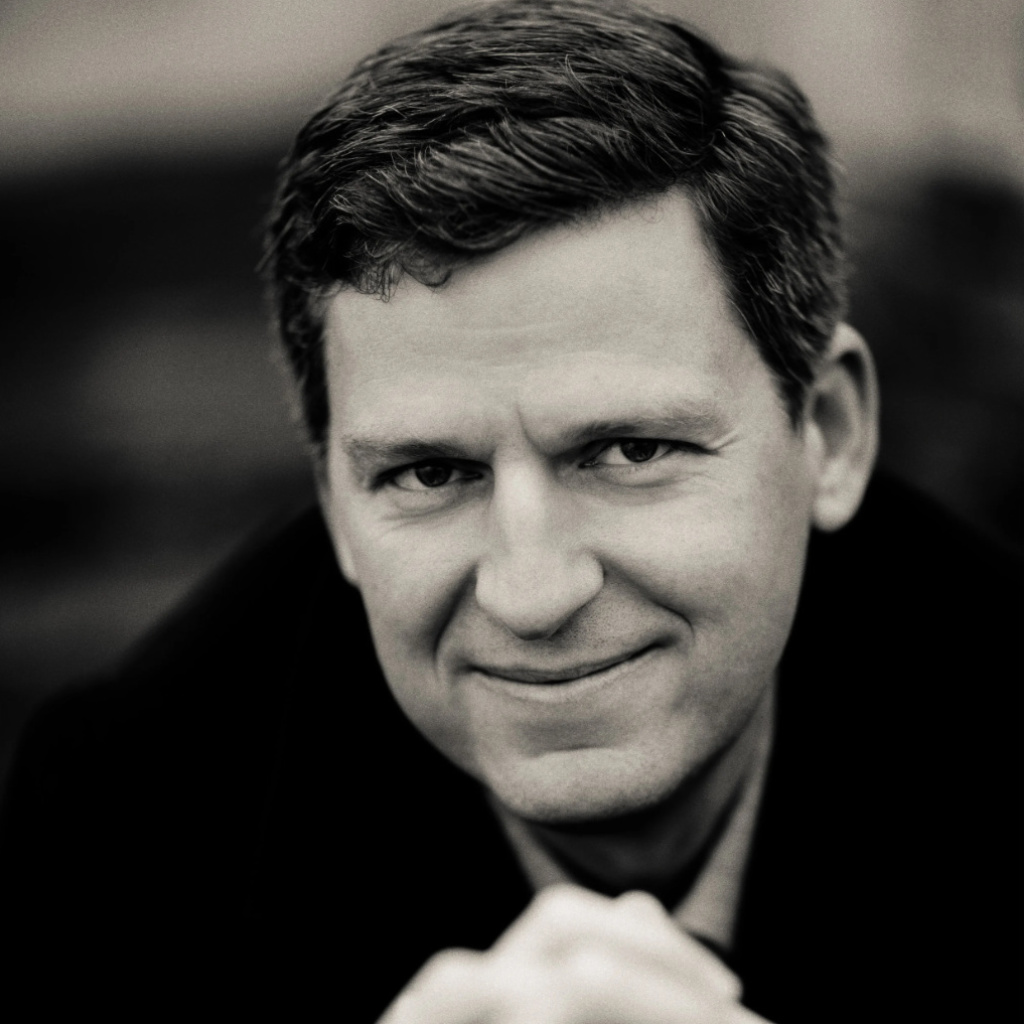
Andrew Armstrong
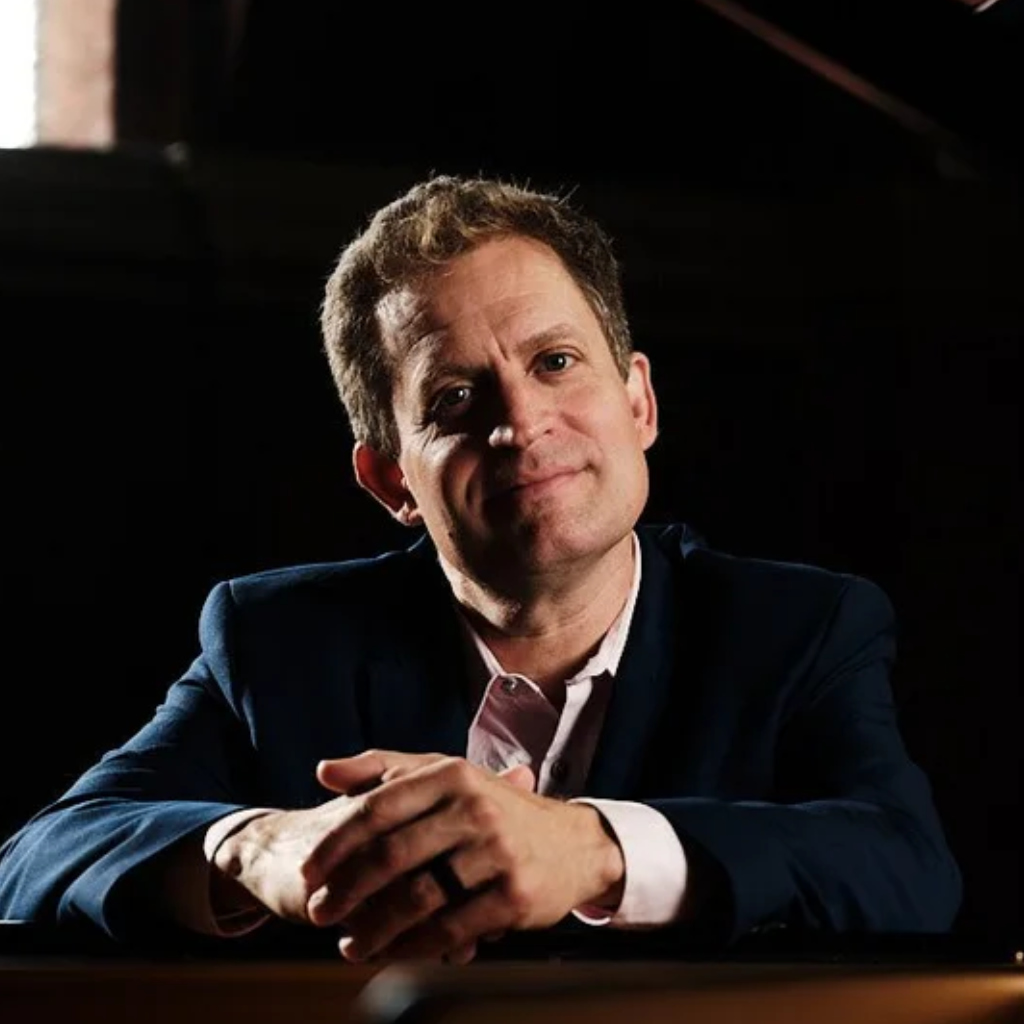
James Ehnes in Recital
James Ehnes, violin
Andrew Armstrong, piano
Suite im alten Stil, Op. 10
I. Presto
II. Adagio
III. Tempo giusto
Christian Sinding
Violin Sonata No. 3 in D Minor, Op. 108
I. Allegro
II. Adagio
III. Un poco presto e con sentimento
IV. Presto agitato
Johannes Brahms
Intermission
Imaginal
Carmen Braden
Violin Rhapsody No. 1
I. Lassú. Moderato
II. Friss. Allegretto moderato
Béla Bartók
Suite im alten Stil, Op. 10
In his Norwegian homeland, Christian Sinding (1856–1941) is a major figure whose latest symphonies, operas, concertos and chamber works were once awaited with eager anticipation. Yet for many years the only piece by which he was widely known was the piano miniature The Rustle of Spring, although violin fans have always had a soft spot for the Suite in Olden Style. Sinding was in fact a violinist by training and went on to compose three concertos for the instrument and a whole series of works for violin and piano, of which this fine recital from Henning Kraggerud forms the first volume.
In the opening Presto of the original version of the Suite (the orchestration followed later), Henning Kraggerud is not quite as scintillatingly fast as Heifetz (RCA) and Perlman (EMI), yet he uncovers in the central Adagio a moving poetic introspection that his esteemed colleagues tend to underplay. Indeed, it is Kraggerud’s chamber-scale sensitivity at all dynamic levels that is a special feature here, enhanced by sympathetic support from Christian Ihle Hadland and typically luminous sound from engineer Arne Akselberg. On paper, such delicate miniatures as the D major Romance op.79 no.2 and Berceuse from op.106 may appear generically unremarkable, but heard via Kraggerud’s micro-shaded, velvety tone colours and gentle interpretative whimsy, they sound utterly enchanting.
Violin Sonata No. 3 in D Minor, Op. 108
The key of D minor was one that Brahms rarely used in his large-scale instrumental works, and one is left to wonder whether the towering shadow of Beethoven’s Ninth Symphony—in D minor—had anything to do with his caution in settling into that tonality. Clearly the tonality aroused Brahms’ most dramatic instincts, yielding music of great urgency, strength, and emotional intensity.
The D-minor Sonata (1888), Brahms’ last of three works for the violin-piano duo and the most muscular of the set, represents the composer at the height of his powers. With all of his symphonies and concertos behind him, and with only a relatively small number of compositions yet to come from his serious and still careful pen, Brahms shows himself to be a master intellect and craftsman, here in complete control of his distinctive materials. Indeed, in the first movement, the composer’s methods become an object lesson in Classic-Romantic procedures.
The dominant elements of the movement are very nearly all contained within the first four measures: three ideas in the violin—an ascending fourth, a falling eight-note figure, and a long-held note followed by a quick note—and, the fourth, the piano’s accompanying line in staggered (thus restless) single notes an octave apart. It is these highly concentrated motifs, so mysterious in their first appearances, which are put through a huge variety of compositional and emotional transformations. The most remarkable of these is in the development section, where the piano intones a pedal point on “A” for 46 measures, above which both violin and piano rhapsodize in a succession of key. This dramatic procedure occurs again at movement’s end, where, however, the action moves from the storms of D minor to the sunshine of D major.
The latter tonality is maintained for the Adagio second movement, a place of tenderness (and only momentary passion) that gives appropriate respite from the strenuous activity of the preceding movement.
The Scherzo movement peers with no little wit and élan from inside its minor-keyed façade (F-sharp minor), like a provocative child making all manner of expressions out of its exceedingly simple thematic physiognomy.
The finale is kaleidoscopic in its changing moods, which range from impetuosity to Hungarian pensiveness to chorale-like calm. Through it all, we have Brahms at his most impressive, at his most compelling.
Imaginal
How caterpillars become butterflies is crazier and more inspirational than I ever knew! Their bodies disintegrate inside the cocoon into a kind of goo and then are rebuilt into a new form that is bewilderingly different than the old. Special cells called “imaginal” cells are the catalysts for this transformation. They lie dormant in the caterpillar until the right phase of metamorphosis, then become the blueprints and building blocks forming the new butterfly wings, body, legs, antennae out of the caterpillar goo. How cool is that. So coo. Goo.
The universal idea is that we all have our future potentials dormant inside us. And when something catalyzes a major transformation, there is a dissolving of the old which is often hard and we fight against it. But then the incredible and tough and beautiful and surprising rebuilding happens. It is super humanly-relatable to being in a mid-life crisis! – or any kind of big life change… I learned about imaginal cells while I turned 40 last year and am working through a now years-long disintegration and rebuilding of my musical directions.
Musically in “Imaginal” there is a core melody woven throughout the piece that goes through many takings-apart and putting-back-togethers. The melody is from a song I wrote in the early writing stages to get me started.
I wrote “Imaginal” for violinist James Ehnes as he turns 50, travels Canada and the world to play beautiful music. Cuz if there’s anything that’ll hold us together in this crazy world, it’s music, friends, and caterpillars.
Commissioned by the Northern Arts and Cultural Centre (lead commissioner), the Banff Centre for Arts and Creativity, Bravo Niagara, Calgary Pro Musica, Canada’s National Arts Centre Orchestra, Cecilia Concerts, Chamber Music Kelowna, Club musical de Québec, Coast Recital Society—Sechelt, Edmonton Chamber Music Society, The Isabel Bader Centre for the Performing Arts, Manitoba Chamber Orchestra, Mount Allison University, The Royal Conservatory of Music, Saskatoon Symphony Orchestra, Scotia Festival of Music, Symphony Nova Scotia, and Whitehorse Concerts.
Violin Rhapsody No. 1
Bartók wrote his two Rhapsodies for violin and piano in 1928, a year he spent at home in Budapest after traveling much of the previous year giving piano recitals. Touring the world was naturally an eye-opening experience, and his letters show that a tour of the United States had left him duly impressed with the sheer size of the country, and with that warm weather wonder, the avocado, which he discovered in Los Angeles.
All the same, much of the music he wrote in 1928 is firmly grounded in his homeland. The First Rhapsody, which also exists in versions for violin and orchestra, and cello and piano is, like much of Bartók’s music, based on Hungarian folk music, which intrigued him both as a composer and as an academic researcher who had traveled the countryside collecting tunes. The Rhapsody is full of the sounds of folk fiddling: improvisatory-sounding variations in the melodies and multiple stops of the sort that would be natural for a player creating his own harmonies as he goes along.
It consists of a Lassú and a Friss, two movements taken from the Hungarian csárdás, where they traditionally would be more or less synonymous with slow movement and fast movement. Things are seldom so simple with Bartók. His Lassú is divided into two outer sections, featuring a ponderous, throaty tune, and a more subdued middle section.
The Friss is based on a folk tune – with an uncanny resemblance to the American Shaker hymn “Simple Gifts” – which is shunted aside for a procession of other folk tunes in a series of episodes in steadily accelerating tempo, reappearing toward the end in a recapitulation as surprising as it is inevitable.
