
The Artists
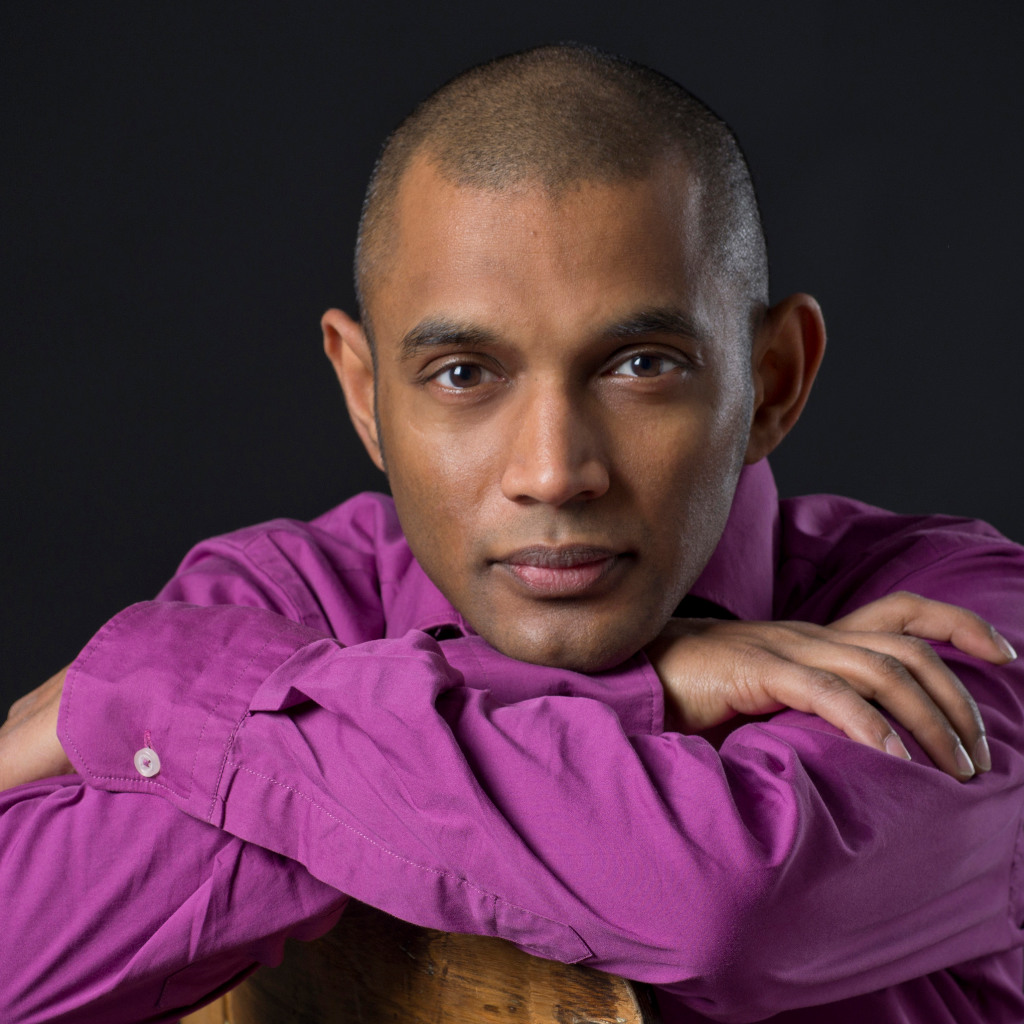
Dinuk Wijeratne
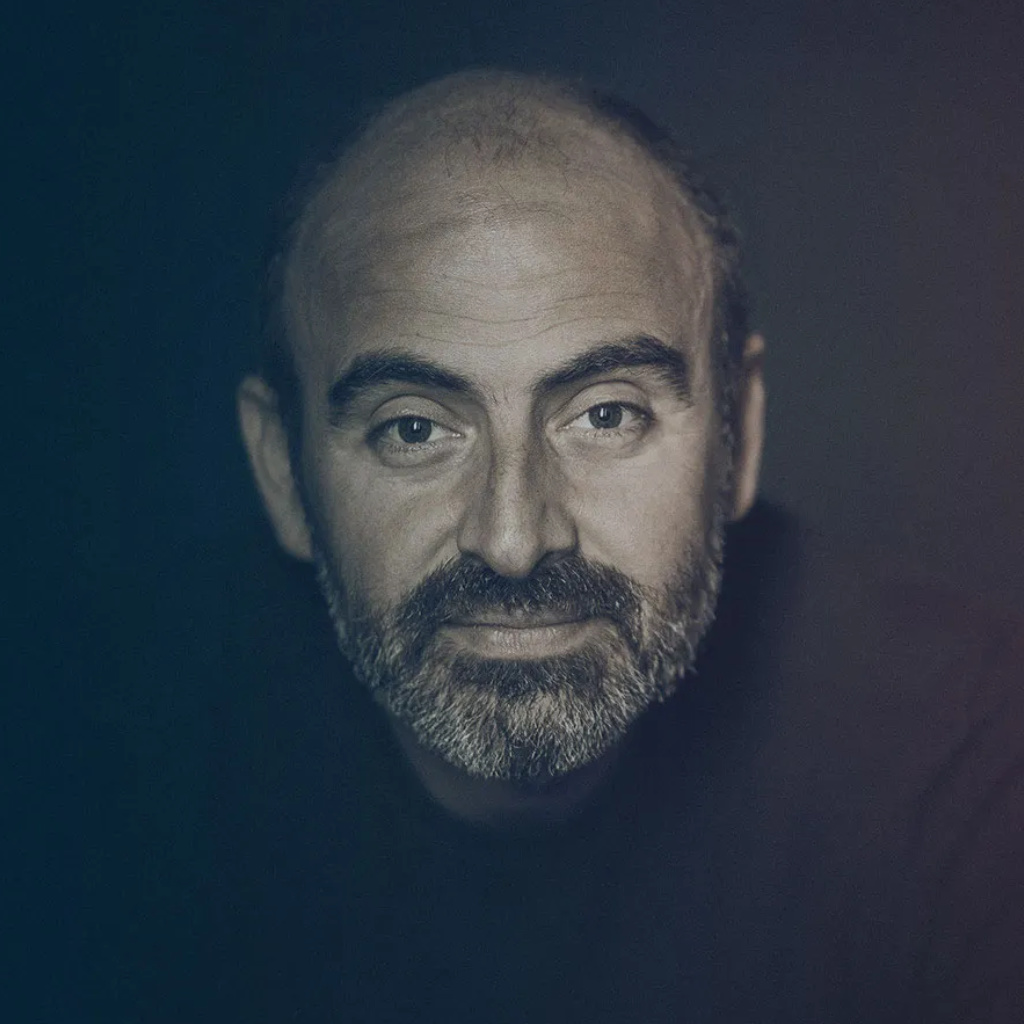
Kinan Azmeh
Additional Artists
This concert also includes:
Violin – Marcel van den Hurk, Brandon Johnson, Cherie Jarock, Hannah Lissel-DeCorby
Cello – Zaide Masich
Horn – Erin McVittie
Piano – Michelle Aalders
The Traveller
Dinuk Wijeratne, conductor/piano
Kinan Azmeh, clarinet
Saskatoon Symphony Orchestra
Syrian Dances
Kinan Azmeh
Clarinet Concerto
Part I – Prologue: Foretelling
Part II – The Dance of Ancestral Ties
Part III – Flux
Part IV – Exile: The salt of bread and rhythm
Part V – Cadenza: Solitary Traveller
Part VI – Epilogue: Home in Motion
Dinuk Wijeratne
Intermission
Polyphonic Lively
Dinuk Wijeratne
Suite for Improvisor and Orchestra
I. 139th Street
II. November 22nd
III. Wedding
Kinan Azmeh
Syrian Dances by Kinan Azmeh
Bela Bartok’s Romanian Dances is a work that has accompanied me for most of my adult life. I have heard and played these little gems in different formations and instrumentations countless times. Throughout all of these experiences I have always felt grateful to Bartok for opening a window for me to peek into the sonic world that inspired him so fundamentally and which was very foreign to me at the time.
Syrian Dances was created with a similar reasoning on my mind, to bring to the spotlight a very diverse and varied musical landscape that has informally shaped my musical upbringing without me realizing it at the time. It is also a heritage that is lesser known and deserves to be discovered. This is not a documentation project but is rather a way to celebrate four traditional songs that continue to live in Syria today. It is important to note that these songs which are much older than the current political borders can also be heard in neighboring Lebanon, Iraq, Palestine and Jordan.
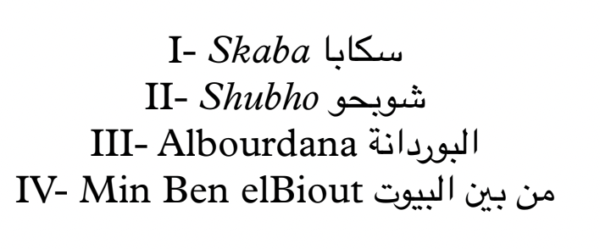
The piece features melodies from these four songs:
Skaba : A popular secular song sung in Arabic with a melody that have ancient Syriac origins
Shubho : A hymn from the Syriac church, usually sung in Syriac (christian Aramaic)
Albourdana : A secular song from al-Jazira region
Min Ben elBiout : A traditional circular dance Dabkeh from southern Syria
I am thankful to the soil that have inspired these songs and to the people who kept these melodies alive over centuries. I also would like to express my immense gratitude to Action for Hope and all the scholars behind the project Syria Music Map (www.syriamusicmap.org) for their tremendous work documenting a heritage that is at a great risk of getting lost.
Last but not least, thank you Palaver Strings for your friendship and for commissioning this work.
Kinan, New York March 1st 2023
Clarinet Concerto by Dinuk Wijeratne
Part I – ‘Prologue: Foretelling’
Part II – ‘The Dance of Ancestral Ties’
Part III – ‘Flux’
Part IV – ‘Exile: The salt of bread and rhythm’
Part V – ‘Cadenza: Solitary Traveller’
Part VI – ‘Epilogue: Home in Motion’
This concerto for clarinet is part autobiographical immigrant story, part response to the Syrian conflict, and part exploration of the notion of ‘home’.
Kinan Azmeh and I have been close friends and musical travellers since our student days at both the Juilliard School and International House, New York City. Our ‘Art of the Duo’ project – a recital of original music for clarinet and piano – continues to take us to concert venues around the world. For me personally, our 2009 Middle East tour left an indelible impression. Particularly memorable were the two concerts in Kinan’s native Syria, in the cities of Damascus and Aleppo.
It seemed natural to me that this piece would become my response to what has transpired in Syria since that time. At the time of writing, the Syrian conflict has claimed 400,000 lives. Since the uprising began in 2011, over five million have fled their country as refugees, the Canadian government having resettled over 40,000 Syrians. At the heart of this music is the question of how one might define – or be forced to redefine – the meaning of ‘home’.
The solo clarinet represents ‘the traveller’, an individual in turns either in line or at odds with his/her environment(s). The concerto has an approximate duration of 27 minutes, comprising six episodes which are designed to run into each other without interruption:
Part I – ‘Prologue: Foretelling’ is a dark musical dream-sequence. The clarinet, beginning offstage, is heard in an anguished premonition of things to come.
Part II – ‘The Dance of Ancestral Ties’ celebrates a carefree childhood, with its essence deeply rooted ‘at home’ both geographically and socially.
Part III – ‘Flux’ destabilizes the traveller’s sense of security. There is a sense of dislocation.
Part IV – ‘Exile: The salt of bread and rhythm’ is a desolate response to the essay ‘Reflections on Exile’ by Edward Said, in which he quotes the poet Mahmoud Darwish. In Said’s words: “[Exile] is the unhealable rift forced between a human being and a native place, between the self and its true home: its essential sadness can never be surmounted.”
Part V – In ‘Cadenza: Solitary Traveller’, the clarinet is left alone to play a cadenza, or solo passage.
Part VI – In ‘Epilogue: Home in Motion’, the traveller learns to be ‘at home’ everywhere.
Suite for Improvisor and Orchestra by Kinan Azmeh
From the composer, Kinan Azmeh:
I have always loved to compose, always loved to play as a soloist with orchestra and I have always loved to improvise, so I decided to write a piece that would allow me to do it all at once!
The three movements: Love on 139th Street in D, November 22nd and Wedding were originally written in 2005 for my project Hewar, an ensemble made of clarinet, oud and voice, and what began simply as three lead-sheets ended up becoming a full orchestral work and my most performed work.
The suite tries to blur the lines between the composed and the improvised, which comes from my belief that some of the best-written music is one that sounds spontaneous and improvised, and some of the best improvisations are the ones that sound structured as if composed. This work is meant to both turn an orchestra into a band and to give a great room for the soloist to improvise
and to “composer on the spot” and to play freely within the larger structure of
the work.
Love on 139th street in D, is inspired by NewYork City’s neighborhood of Harlem where I lived for few years, a simple homage to its cultural mix and a dedication to my downstairs neighbor who blasted reggaetone all day long!
November 22nd is a meditative work that tries to depict that ambiguous emotion one encounters by feeling at home somewhere far from one’s original home. I wrote this piece in the US inspired by the sonic memory of a marketplace that used to exist behind my parents apartment back in Damascus, it seemed to have a slow and steady pulse to it similar to the rhythm of life which keeps moving forward regardless of our emotions about it.
Wedding is made of two contrasting sections, a relatively calm one followed by a fast and energetic dance. It tries to capture the general mood found in a Syrian village wedding party usually held in the public square for everyone to attend. These parties are always exciting and never predictable.
Polyphonic Lively by Dinuk Wijeratne
Pol·y·phon·ic (adj.) – many-voiced, [music] composed of relatively independent melodic lines or parts.
Live·ly (adj.) – full of life or vigour.
“While browsing through a library book of very vibrant artwork by Paul Klee, the 20th century Swiss-German master, I was struck by the title of one of the paintings: ‘Polyphonic Lively‘. Though the two adjectives back-to-back suggest that something may have been lost in translation, I felt compelled to turn these very vivid and evocative words into music. They immediately conjured up high-vibration, high-intensity ‘chatter’, and also seemed nicely suited to the celebratory nature of an orchestra’s season opener.
Music, as a communicative medium, offers unique and wonderful opportunities for stacking contrasting ideas – for ‘polyphony’. As a composer I like to explore the possibility that musical voices, each conveying an idea that is either supportive or subversive, can be allowed to coexist in a way that often eludes us in today’s world. The nature of ‘Polyphonic Lively‘ is character-driven and, through sharp turns and decisive action, its ‘journey’ is simply what the characters make of it. Its musical fabric is a multiplicity of voices, lines, and themes that decide – on a whim – when to coalesce and coexist.”
Special Thanks To The Following
- Thank you for the use of percussion equipment from the Saskatoon Concert Band and the University of Saskatchewan School for the Arts – Music
- Thank you to the amazing volunteers of the SSO’s Book and Music Sale. They are so dedicated to creating the best sale possible. Making sure that shoppers have access to the things they want to find, take special care of the treasures that get dropped off for us. It’s amazing – thank you to them all for their extraordinary hard work!
