
The Artists
Judith Yan

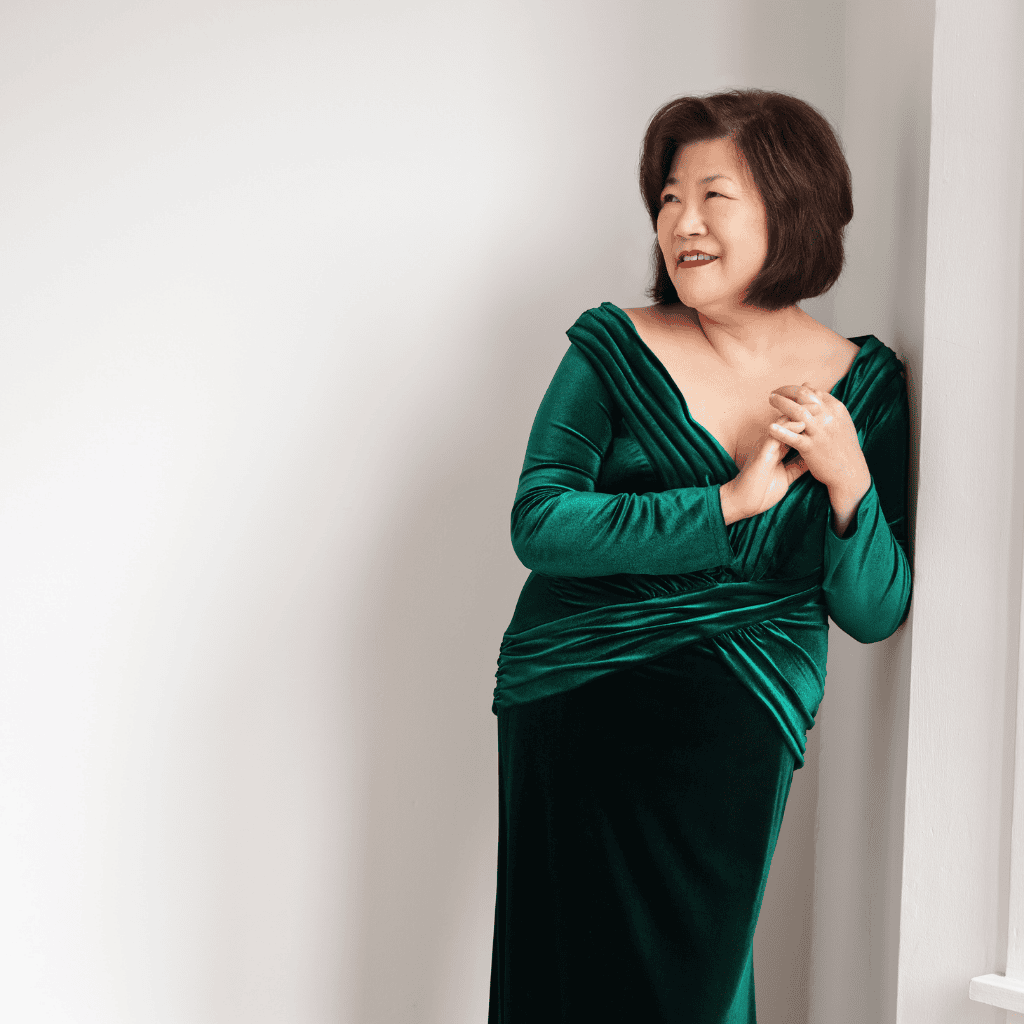
Angela Cheng
Additional Artists
This concert also includes:
Violin – Marcel van den Hurk, Nova Wong, Cherie Jarock
Viola – Heather Wilson, Mehtab Singh Bath
Bass – Emmett Fortosky, Lucas Brown
Flute – Jennifer McAllister
Oboe – Carl Hofmeister
Clarinet – Alyssa Thompson
Piano – Michelle Aalders
Harp – Christina Kant
Everything is Romantic
Judith Yan, conductor
Angela Cheng, piano
Saskatoon Symphony Orchestra
Lyric for Strings
George Walker
Love Theme, Adagio from Spartacus
Aram Khachaturian
Romeo and Juliet, Fantasy Overture
Piotr Ilyich Tchaikovsky
Intermission
Piano Concerto No. 2 in C Minor, Op. 18
I. Moderato
II. Adagio sostenuto
III. Allegro scherzando
Sergei Rachmaninoff
Lyric for Strings by George Walker
George Walker’s Lyric for Strings is a short, deeply emotional work for string orchestra. A piece that feels both intimate and expansive. Originally composed in 1946 as the second movement of his String Quartet No. 1, Walker later arranged it for string orchestra and dedicated it to his grandmother, who had been formerly enslaved. The music is gentle, full of warmth, sorrow, and grace. Its slow, singing lines and lush harmonies have drawn comparisons to Barber’s Adagio for Strings, but Lyric has a voice all its own — expressive and restrained, never overstated. It unfolds slowly, with subtle shifts in color and texture that give it a timeless, meditative quality. George Walker became the first African American composer to win the Pulitzer Prize for Music in 1996. Lyric for Strings remains his most performed work, often featured in memorials and reflective programs a testament to its emotional depth and universal beauty. It continues to resonate across generations as a powerful musical expression of love, remembrance, and dignity.
George Walker, composer
George Walker was a trailblazing American composer, pianist, and educator whose career broke barriers and reshaped the landscape of classical music. Born in Washington, D.C., Walker had a huge talent; he entered Oberlin Conservatory at age 14, later studied at the Curtis Institute of Music, and earned a doctorate from the Eastman School of Music. His achievements were historic as he was the first African American graduate of Curtis and, in 1996, the first African American to win the Pulitzer Prize for Music. Walker’s music is wide-ranging, blending Romantic lyricism with modernist techniques and elements of African American spirituals and jazz. His catalog includes symphonies, concertos, chamber music, and solo piano works. He was also a celebrated pianist, performing with major orchestras and often premiering his own compositions. Although Walker faced significant challenges in a field that often overlooked composers of color, his music steadily gained recognition for its depth, beauty, and individuality. Works like Lyric for Strings and his Pulitzer-winning Lilacs remain powerful examples of his expressive voice. Walker’s sons also found success in the arts, one as a concert violinist, the other as a member of the hip-hop duo Arrested Development.
Love theme, Adagio from Spartacus by Aram Khachaturian
Aram Khachaturian’s Spartacus is a sweeping ballet filled with passion, heroism, and drama, and its most famous moment is the Adagio of Spartacus and Phrygia, often known as the “Love Theme.” This hauntingly beautiful music captures a tender, intimate moment between Spartacus, the gladiator-turned-rebel, and Phrygia, his beloved. In the middle of a story driven by rebellion and struggle, this adagio brings everything to a pause, letting love take center stage. The melody unfolds slowly and gracefully, carried by lush strings and warm harmonies. It’s music full of longing, strength, and vulnerability, and it’s no surprise it became one of Khachaturian’s most beloved themes, used in film, television, and even ice dancing. Spartacus premiered in the Soviet Union in 1956, during the post-Stalin “Thaw,” a time when artists were cautiously exploring more emotional and expressive freedoms. Khachaturian’s romantic and cinematic music stood out from the often rigid expectations of Soviet art, and this adagio became a lasting symbol of beauty rising from struggle.
Aram Khachaturian, composer
Aram Khachaturian was one of the most celebrated composers of the Soviet era, known for blending classical Western forms with the folk rhythms and melodies of his Armenian heritage. Born in Tbilisi, Georgia (then part of the Russian Empire), Khachaturian didn’t begin formal music studies until his late teens but quickly rose to prominence, studying at the Moscow Conservatory and becoming a major figure in Soviet music. His music is bold, vibrant, and highly rhythmic, often drawing on the sounds of the Caucasus region. He’s best known for large-scale works like his ballets Gayane and Spartacus, as well as his Piano, Violin, and Cello Concertos. The famous Sabre Dance from Gayane remains one of the most instantly recognizable classical pieces in the world.Khachaturian walked a fine line in Soviet cultural life: he received high honors like the Stalin Prize and was named a People’s Artist of the USSR. Despite political pressures, he continued to write expressive, emotionally rich music throughout his life.
Romeo & Juliet, Fantasy Overture by Tchaikovsky
Tchaikovsky’s Romeo and Juliet isn’t a literal retelling of Shakespeare’s play, but more like an emotional highlight reel. This orchestral piece, called a “Fantasy Overture,” captures the big themes: the quiet solemnity of fate, the tension of family conflict, and of course, the sweeping intensity of young love. You’ll hear the famous love theme, lush, soaring, and instantly recognizable, sandwiched between dramatic musical battles and moments of tragic reflection. Tchaikovsky struggled to get this one right. The first version premiered in 1870, but he wasn’t satisfied. With advice from fellow composer Balakirev, he revised it twice over the next ten years before it became the powerful, polished piece we hear today. What makes it special is how clearly Tchaikovsky channels the story’s emotions into music. Even without words or staging, you’ll feel the joy, the heartbreak, and the sense that love, however short-lived, leaves a permanent mark.
Piotr Ilyich Tchaikovsky, composer
Tchaikovsky is one of the most beloved composers of the Romantic era, known for his intensely emotional music and unforgettable melodies. Born in a small Russian town, he originally trained to be a civil servant before enrolling at the St. Petersburg Conservatory, one of the first professional music schools in Russia. His music would go on to define Russian classical sound on the global stage. Tchaikovsky’s works include symphonies, operas, chamber music, and some of the most famous ballets of all time Swan Lake, The Sleeping Beauty, and The Nutcracker. He had a gift for combining Western compositional techniques with deeply expressive Russian themes, and his music often reflects personal emotional struggles. Despite his fame, he was a deeply private and at times tormented figure, navigating societal expectations, professional criticism, and personal identity in 19th-century Russia. Tchaikovsky never met his greatest patron, Nadezhda von Meck, face to face. She supported him financially for over a decade under the condition that they would never meet — a peculiar arrangement that helped fuel the creation of some of his most iconic music.
Piano Concerto No. 2 in C Minor, Op. 18 by Rachmaninoff
Rachmaninoff’s Piano Concerto No. 2 is one of the most beloved works in the Romantic piano repertoire, it’s passionate, stormy, and sweeping in scale. But it almost didn’t exist. After the poor reception of his First Symphony, Rachmaninoff spiraled into a deep depression and struggled with creative block. It wasn’t until years later, after hypnotherapy and support from friends, that he began composing again and the result was this concerto, which reestablished him as a leading composer. The piece opens dark and brooding, with tolling piano chords that gradually build into a soaring melody some describe as a musical rebirth. The second movement is dreamy and lyrical, while the third bursts forward with energy, eventually returning to one of Rachmaninoff’s most heart-stirring themes. Throughout, the piano writing is virtuosic yet emotionally grounded, showcasing both the power and vulnerability of the soloist. The second movement’s melody became the basis for the 1975 pop hit “All by Myself” a testament to how Rachmaninoff’s emotional language continues to resonate across genres and generations.
Sergei Rachmaninoff, composer
Sergei Rachmaninoff was a towering figure in both Russian and international music, a composer, pianist, and conductor whose work bridged the Romantic and modern eras. Born into a noble family in Russia, Rachmaninoff studied at the Moscow Conservatory, quickly earning recognition for his prodigious talent. His early success was soon tested: the disastrous premiere of his First Symphony in 1897 left him deeply discouraged and creatively blocked for years. But Rachmaninoff made a remarkable comeback. With help from therapy (still a rarity at the time), he composed his Piano Concerto No. 2, a masterpiece that launched the next phase of his career. He became internationally celebrated not only for his compositions but also for his electrifying piano performances, known for their power, precision, and emotional depth. Forced to flee Russia during the 1917 Revolution, Rachmaninoff eventually settled in the United States. Though his compositional output slowed, his reputation as one of the greatest pianists of his time only grew.
Special Thanks To The Following
Our Partners