Brahms’ Haydn Variations

Brahms’ Haydn Variations

As a child, you may have been told that (through fairy tale magic) Rumpelstiltskin spun straw into gold. A neat parlor trick, perhaps, but how does it stack up against a Red Hedgehog spinning a mystery into eight pastoral vistas? Johannes Brahms was given the moniker “Red Hedgehog” after the Vienna coffeehouse of the same name. The famed Romantic composer was so fond of the place that he stubbornly refused to eat or drink anywhere else for most of his adult life. Brahms himself was not unlike a hedgehog anthropomorphized: whiskered and portly, described as having a “…notoriously curmudgeonly [exterior], but [one that] hid a profoundly sensitive and noble nature for which he found fullest expression in his music.” Nowhere is this nobility of musical spirit more evident than in his “Variations on a Theme by Haydn”.

A clear testament to the musical genius of its composer, the “Variations on a Theme by Haydn” was composed by Johannes Brahms in the summer of 1873. Penned during his stay at the gorgeous town of Tutzing in Bavaria, Brahms originally set the piece for two pianos. Soon after, he made the decision to adapt his variations for orchestra, and it is this version which enjoys a more enduring popularity today. But how did the Red Hedgehog stumble across this theme by Haydn? And what was it about this theme that moved Brahms to compose eight unique variations? 

Three years before he would compose the Variations, Brahms met with his friend Carl Ferdinand Pohl for coffee. At that time, Pohl was a musicologist and biographer of Haydn, serving as the librarian of the Vienna Philharmonic Society. He had called Brahms over to share with the composer what he believed to be an important discovery: a work that bore the name of the great eighteenth century composer Joseph Haydn that was utterly unknown to him. 

Pohl had made a transcription of the original piece (titled Divertimento No. 1) for Brahms to examine, who was particularly drawn to the second movement. This section bore the heading “St. Anthony Chorale” and immediately caught Brahms’ eye because of its odd melody (which began with two irregular, five-bar phrases). Brahms furiously scribbled down the melody of the “St. Anthony Chorale”, thanked Pohl profusely, and bustled out into the busy Vienna streets. Unlike most people, who needed a walk to clear their heads, Brahms required long sojourns in the countryside to access the most passionate (and personal) fragments of music that swirled within his mind. 

But Pohl had unintentionally slipped The Red Hedgehog a red herring, as Divertimento No. 1 was not actually composed by Haydn at all. Subsequent research has concluded that Divertimento No. 1 could not have been composed by the Father of the String Quartet, because it does not utilize the most oft-encountered hallmarks of Haydn’s musical style. Some academic sources posit that the Divertimento was written by Ignaz Pleyel, a student of Haydn’s, but this has not been definitively established. In the early nineteenth century, it was quite common for music publishers to attribute certain works by lesser or flat-out unknown composers to famous ones to increase the likelihood of a sale. This might explain why the Divertimento No. 1 was labeled “Haydn” in the first place

But this musical “whodunnit” grows even more perplexing when one considers the second movement of Divertimento No. 1. The mysterious composer of this work could have created the “St. Anthony Chorale” themselves, but it is more plausible that they created the melody by embellishing a pre-existing chorale. Unfortunately, it is here that the trail grows cold…as no record of a “St. Anthony Chorale” (or its unique melody) predating Divertimento No.1 has ever been found. 

In more recent years, musical scholars have attempted to rename the variations Brahms created around the theme of Divertimento No. 1’s second movement. Many musicologists now agree that “The St. Anthony Variations” is a more appropriate title for Brahms’ masterwork. After all, it is this theme which, in its entirety, forms the melodic backbone for the eight variations that follow. And, as the name implies, each of Brahms’ thematic recreations vary in small but significant ways from their prototype, most notably in their coloration, tempos, and overall character. Several of the variations recollect the technical forms of earlier musical eras, and many of these specific variations showcase Brahms as a master of counterpoint: one whose innate gifts with creating musical textures set him apart from later composers of the Romantic period.

To begin the piece, the main theme of Brahms’ St. Anthony Chorale rings out (retaining its original key of B major and appearing very much the same as it did in Divertimento No. 1). Structurally, this introduction is divided into two segments: the first explores a musical idea before repeating itself; the second section develops contrast before returning to the idea of the first segment. A coda and a repetition of the second half of the main theme ingrain its melody deep into the mind of the listener before Brahms’ magical variations begin.

Variation I arrives in a sweeping gust of colored leaves. Featuring a favorite musical texture of Brahms (triplets against duplets), the interplay of cellos and violins recall the majesty of Autumn. While the celli carry the triplets in the first half of this variation, the second half sees them trade these triplets for the duplets played by the violins in the first half. Variation II delights in explosive contrasting dynamics, a Romanian-inspired caravan dance in the parallel minor. The feeling of content meandering the orchestration produces in the listener calls to mind the rolling hills and valleys that Brahms no doubt explored while he dreamt up this masterpiece of music.

Variation III is a longer reimagining of the main theme, one which emphasizes the clarity of the oboes and bassoons to full effect. Brahms is constantly shifting around musically in this variation, re-orchestrating the repeats of each half of the main melody. We see the sky, feel the clouds, and hear the birds take flight in Springtime. As Variation IV returns to the parallel minor, a reflective oboe slows our pace through the virtual countryside down to that of a pleasant stroll. When Variation V arrives, we see something darting out onto the country path. A rabbit? A fox? It matters not, some sort of hunt is at hand! This scherzando variation bubbles with all the joyful youth that comes with the chase.

Variation VI confirms that a stately ride through the verdant forest is just what our hearts desire. The most dramatic of the variations by far, its soft beginning places the brass section firmly in charge (as well they should be during a hunt!). The quarry is chased round and round, up and down, as the second half charges the orchestra into a full fortissimo. We are before the Boar, about to snag the Stag, and then… Variation VII gracefully lulls us into a dreamlike fantasy. The tenderness of the interplay between instruments high and low seems to exemplify the balance between humankind and the natural world around us. Variation VIII descends in a mantle of mist-filled magic. Another scherzando variation, this time in the minor, it invites the translucent faeries and other winged creatures of fantasy that inhabit the forests to partake in a celebration. 

The finale emerges in the form of a chaconne, an older form of variation in which a short bass line repeats again and again. The upper parts of Brahms’ orchestration are quite varied here, and each instrument is encouraged to insert improvisatory musical remarks over the consistency of the bass line. This riff is a distilled version of the main theme, and above it Brahms strings musical lights through the trees of the celebrating forest by establishing a heartwarming array of choral textures in the upper strata of the orchestration. And so we are taken on a short but exhilarating flight out of the forest canopy and left to float delicately among the clouds as the colors of sunset fall gently around us. A brief return of the parallel minor signals that our feet have touched down on solid ground once more, and that there is traveling yet to do. There are hints of Variation II’s Romani music that feature as the finale builds to welcome a grand return of the main theme. 

And just when the listener thinks Brahms is fresh out of genius moves, the composer plants a delightful musical easter egg in the coda of the Finale to tie the entire piece together. He unwittingly renders all the mystery surrounding the original composer of St. Anthony’s Chorale utterly moot…by quoting a musical passage that really is by Haydn. In measures 463–464, the violas and celli echo the cello line from measure 148 of the second movement of Haydn’s “Clock” Symphony. The love of the outside world is wrapped around the listener in a powerful but gentle embrace, and the victorious final chords hurtle across the night sky like shooting stars. 

Brahms’ Variations on a Theme by Haydn were first performed in their orchestral rendition on the 2nd of November, 1873, by the Vienna Philharmonic Orchestra. Their maestro that evening was the Red Hedgehog himself, the rough-and-tumble pianist whose tribute to a musical giant took classical music to even greater heights. No doubt on that fateful night, somewhere far above the rapturous applause, Papa Haydn smiled on Brahms’ efforts with fond appreciation. The SSO is honored to bring this masterwork to life at our Visit to Vienna concert!  

Composers Series – Brahms

In 2016 the SSO reached out to artist Denyse Klette to pitch the idea of having her create an portrait of Mozart to help the SSO celebrate its Mozart Festival in 2017 – what was originally a simple one-off idea for promotional piece became a multi-year project that has been remarkably rewarding for both parties.

First came Mozart in 2017, then in 2018 an exceptional portrait of Joni Mitchell for our concert “Don’t Give Yourself Away – the Music of Joni Mitchell”. Then in 2019 we unveiled Denyse’s now iconic image of Beethoven that adorns the SSO’s windows at our offices on 51st street. It was sometime in 2019 that we realized this had to be a long term project together that would be added to each year.

And now for our Visit to Vienna concert, we’re thrilled to unveil Denyse’s Brahms.

Romantic. Passionate. Indulgent.
Johannes Brahms is a towering figure of the romantic era – passionately taking the structures and forms of the music before him and tearing it into a new romantic future. A lover of nature and long walks, the composer gained himself the nickname “the hedgehog” due to his almost nightly visits to the Viennese pub “The Red Hedgehog”.

Brahms’ music is at once full of colour and full of reverent restraint. It is completely caught up in heart-on-sleeve romance while finding the struggle between old forms and new sounds. He lived a life that was the stuff of legends, and his story is forever intertwined with Clara Schumann. The tenderness in their letters shows a man who loved with his whole heart.

An exceptional pianist, gifted with a sense of melody and harmony, Brahms’ music is evergreen and never loses its lusture.

Denyse Klette is one of Saskatchewan’s most celebrated artists; her work hangs in homes, galleries, and public spaces across the globe. Denyse is Canada’s only Disney Artist, and her work is full of colour and life that captures her joyous personality.

The Composers series are available in limited edition canvas prints. They’ll soon be available for purchase on our website.
To find out more, please email us at office@ saskatoonsymphony.org

Conductor Shah Sadikov

Shah Sadikov is new to Saskatoon, and because of the pandemic He saw his travel schedule come to a halt and its a treat to have him joining us for his first time with the SSO!

An adamant believer in the power of music to unite, inspire, and elevate, Shah (Shokhrukh) Sadikov is one of the most driven young conductors of his generation. From concert halls to classrooms, community centres and libraries, Sadikov leads an engaged career as a conductor, violist, and music educator. His work with numerous organizations, hundreds of people, and advocacy of access to the arts-for-all stands as a testimony to his belief.

In 2015, Mr. Sadikov co-founded and became the CEO and Music Director of a non-for-profit arts organization, NAVO Inc. (navoarts.com), whose mission is to create unique programs that challenge, entertain, and enrich the lives of underserved communities in the Midwest. In its only few years of existence, NAVO has already reached audiences in the states of Kansas, Missouri, Nebraska, and Illinois. During the 2018-19 season he also led the Overland Park Orchestra as the Music Director.

During his tenure as Music Director of the Hays Symphony Orchestra (2015-2019), the orchestra has reached its first pedestal of success in every direction: innovative programming that appeals to a wide range of audience (including two festivals: Cottonwood Chamber Music in the Spring and New Music in the Fall), high quality concerts with a strong regular following, the first HSO brand, website, and the Hays Youth Orchestra. The Children’s Halloween concert became one of the most successful family events of the city. Mr. Sadikov also worked as an assistant professor of upper strings and orchestra director at Fort Hays State University.

Sadikov appeared as a conductor, soloist, and principal violist with the National Symphony Orchestra and the National Radio Chamber Orchestra of Uzbekistan. He also conducted ensembles such as the Tokyo Philharmonic, Aspen Festival Orchestra, Aspen Chamber Symphony, Berlin Sinfonietta, Kazakh State Philharmonic, Kansas City Civic Orchestra, Kansas Wesleyan Chamber Orchestra, Medomak Symphony Orchestra, Taldykorgan Philharmonic, Chamber Orchestra “Turkiston” and newEar Contemporary Ensemble among others.

As violist, Mr. Sadikov performed in festivals that include Aspen, Sarasota, Halcyon, Killington, Cottonwood, Lincoln Crossroads and Vladimir Spivakov’s “Moscow Meets Friends”. He produced two recordings with he rapper Tech 9 under the Strange Music label, and released two CD’s of viola works by Brahms, Schumann, Clarke, and Ingrid Stölzel. He recently performed recitals in Germany, Uzbekistan, and the United States, and played his Carnegie Hall debut in 2014.

As a founding member of Wakarusa Trio, Mr. Sadikov is a first prize winner of the Coleman Chamber Music Competition, American Protégé International Competition and MTNA Competition, as well as a Bronze medalist at the Chamber Music Foundation Competition of New England. As a soloist and conductor, he is a laureate of several international competitions such as the 2005 Young Artist Competition of the Republic (Uzbekistan), the 2006 International Competition in Almaty (Kazakhstan) as well as the Tolebaev Conducting Competition (Kazakhstan) in 2019.

Upcoming engagements include an invitation to conduct the Shenyang Symphony in China, Taldikorgan Philharmonic Orchestra and Kostanay Philharmonic Orchestras in Kazakhstan, National Symphony Orchestra and Turkiston Chamber Orchestras in Uzbekistan, as well as an opera debut at the State Academic Bolshoi Theater in Uzbekistan, conducing Donizetti’s Lucia de Lammermoor. Mr. Sadikov currently performs on superb contemporary instruments, both, viola and violin made by Douglas Marples.

Cellist Oleksander Mycyk

The pandemic brings a few bright shining moments of silver lining – and the SSO jumped on the opportunity to seize this silver lining. Cellist Oleksa Mycyk came home to Saskatoon to be with family when the pandemic started, and now he’s making his SSO solo debut!

Oleksander enjoys a multi-faceted career as a solo,  chamber, and orchestral performer and teacher. He is completing a Doctor of Musical  Arts degree at Northwestern University and is a Teaching Assistant to Professor Hans Jørgen Jensen.

He recently completed the Certificate in Performance Program at  Northwestern while a full-time member of the Chicago Civic Orchestra and currently  performs as a substitute cellist with the Chicago Symphony Orchestra, and the  Chicago Philharmonic Orchestra. Oleksander began his cello studies in Saskatoon  with Lahni Russell and performed with the Saskatoon Youth Orchestra and Saskatoon  Symphony Orchestra.

He completed a Bachelor of Music Performance degree at the  University of Toronto, and a Masters in Solo Performance at McGill University  studying with Matt Haimovitz. He has also performed in masterclasses around the  world for cellists such as Janos Starker, Lynn Harrell, Laurence Lesser and Aldo  Parisot.

He has been the recipient of numerous awards including the Felix Galimir  Award for Excellence in Chamber Music, and the Gregor Piatigorsky Memorial Award.  A multiple laureate of solo and duo competitions, Oleksander has been a National  Finalist in the Canadian Music Festival and a top prizewinner in the Canadian Music  Competition. Recent performance highlights include the world premiere of Elizabeth  Ogonek’s chamber work Water Cantos, led by Esa-Pekka Salonen during the Chicago  Symphony Orchestra’s MusicNOW concert series as well as being featured as soloist  with the Canadian Chamber Choir on their US tour.

International appearances have  included performances with the Grammy nominated Uccello ensemble at the  International Cello Congress in Israel. Oleksander teaches applied cello at  Northeastern Illinois University in Chicago, IL.

See Oleksa as part of our Visit to Vienna concert performance!

Haydn’s Cello Concerto in C

Haydn’s Cello Concerto No. 1 in C major is believed by music historians to have been composed between 1761 and 1765. Dedicated to the composer’s good friend Joseph Franz Weigl, who served as the principal cellist of Prince Nicolaus’s Esterházy Orchestra during this time, the work was lost for nearly 200 years before a copy of its score resurfaced at the Prague National Museum in 1961.

Joseph Haydn

Musicologist Oldřich Pulkert was responsible for finding the score amidst other manuscripts he was charged with organizing at the time. One year after its re-emergence, the concerto received its 20th century premiere by Miloš Sádlo and the Czechoslovak Radio Symphony Orchestra (conducted by Sir Charles Mackerras) on 19 May 1962.

Though the original manuscript of the completed concerto is presumed to have been destroyed by time, an early draft of the beginning of the first movement’s principal theme survives in Haydn’s draft catalogue of 1765. This indicates that Haydn was starting to compose his first cello concerto around the same time as his Symphonies 6,7, and 8. It would be an additional 20 years before he would write another concerto for cello, but this first foray clearly demonstrates Haydn’s mastery of instrumental writing…particularly for the string section.

With idiomatic writing that flourishes throughout, this concerto bridges the gap between the oft-used ritornello form of the baroque concerto and the sonata-allegro form which was being developed by visionary composers like Haydn throughout his lifetime. With a small accompanying ensemble (a nod to the baroque concerto grosso), Haydn places his full trust in the cello line to summon passion and vibrancy to support the efforts of the other players.

Unlike his second cello concerto, where rondo form is used in the second and third movements, all three movements of the first concerto are written in sonata form. Its structural patterning (a first movement defined by etched rhythms leading into a series of flowing second themes, a peaceful slow movement, and a brisk finale) make for a remarkable resemblance to his Violin Concerto no. 3 in A major. In fact, both pieces were composed for orchestra during the same period of the composer’s life.

The authenticity of the concerto’s authorship has been raised by several musical authorities, but many experts believe that there is enough evidence to support this being a genuine product of Haydn’s creative genius. In the slow movement of this concerto, for example, the cello enters dramatically on a long note, played while the orchestral strings relaunch the theme heard during the opening of the piece. The cello goes on to imitate this melody two measures later, a musical gesture that was characteristic of Haydn’s compositional style.

Haydn’s Cello Concerto No. 1 in C major has been recorded by many famous artists, including Yo-Yo Ma, Jacqueline du Pré, Truls Mørk, and Julian Lloyd Webber. The virtuosity and passion it demands from its ensemble and soloist alike is supreme, and the SSO and Oleksa Mycyk’s take on this long-lost classic is sure to bring you to your feet.

Hear this work as part of our concert A Visit to Vienna!

Pretzels for Oktoberfest!

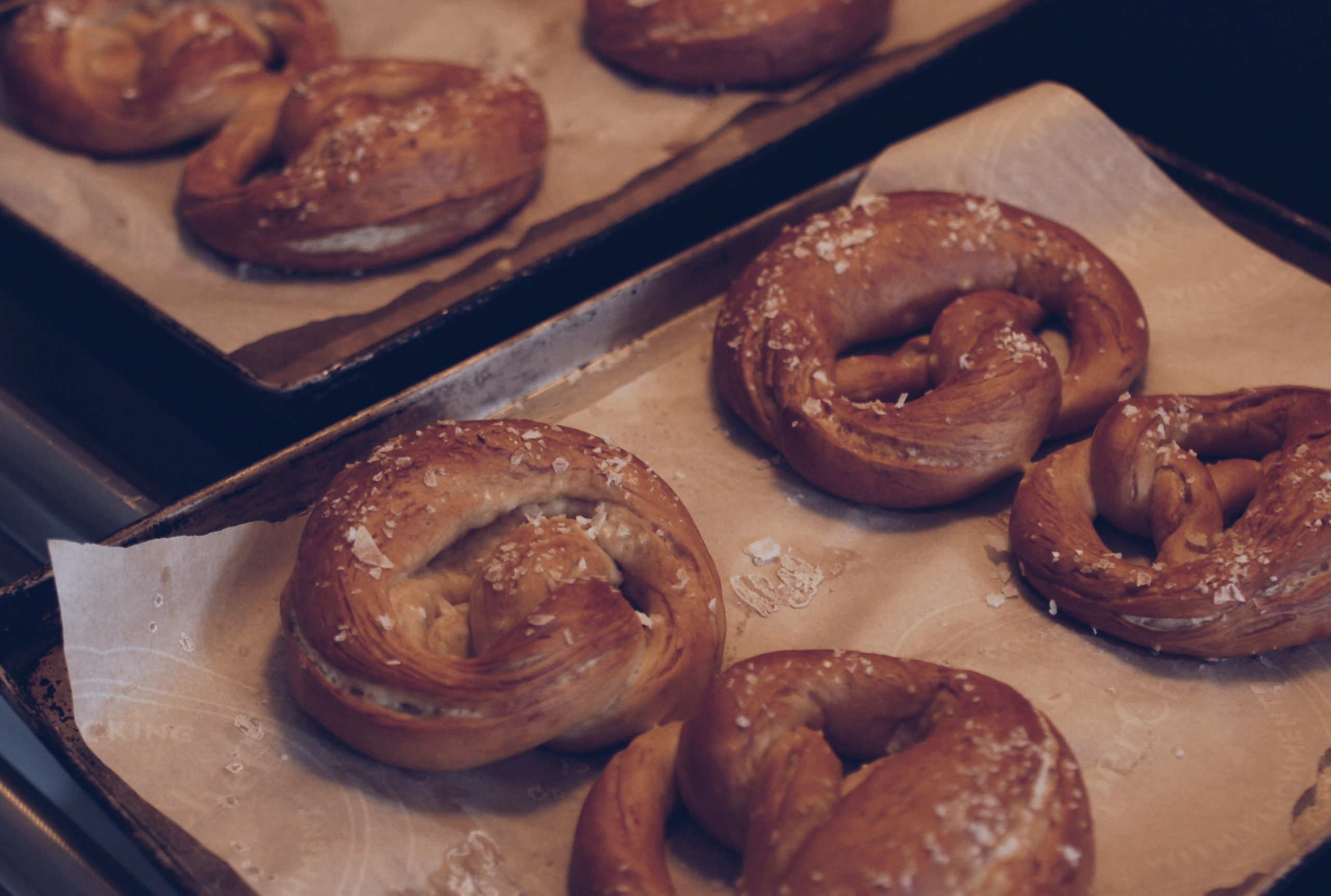
Well it isn’t Oktoberfest without a Bavarian pretzel – the tasty golden brown salty treat is iconic. If you’re like us, you’re too intimidated to make them from scratch…but thanks to a friend of the SSO we found out it’s easier than we thought.

Educator, author, and illustrator Peter Cowan helped us build our kids show Little Ludwig (released in just a few weeks!), and now he’s helping us learn how to make delicious Bavarian pretzels. We’re grateful that he let us invade his home to learn how to make amazing pretzels!

FOR THE PRETZELS:

  • 3/4 cup milk, lukewarm
  • 1/2 cup water, lukewarm
  • 1 1/2 tsp brown sugar or malt extract
  • 2 1/2 tsp instant or active dry yeast
  • 3 Tbsp unsalted butter, melted
  • 4 cups all-purpose flour
  • 2 tsp table salt

FOR THE BATH:

  • 4 cups water
  • 3 Tbsp baking soda

TOPPING:

  • 2 Tbsp coarse salt (we used Maldon salt as we find it works the best)

INSTRUCTIONS:
1. In the bowl of a stand mixer fitted with the dough hook attachment combine lukewarm milk, water, and brown sugar. Stir together with a fork then sprinkle instant (or active dry) yeast on top. Give it a swirl with the fork and let sit for about 5 minutes until foamy.

2. In the meantime melt the butter over low heat, then let cool for a few minutes.

3. Add flour, melted butter, and salt to the bowl with the yeast and knead for 5 minutes until the dough is smooth and elastic. Cover bowl with plastic wrap put it in a warm place and let the dough rise until doubled (about 1 hour).

4. Punch down the dough and divide it into 8 equally sized pieces. Roll each piece into a 16-inch (40cm) long rope, the middle part (about 2 inches or 5 cm) should be bulged to a diameter of about 1.2 inches and the ends should be thinned out to about 0.3 inches (0.75 cm).

5. Bring the ends together so the dough forms a circle. Twist the ends together twice then fold them down onto the bottom curve. Press ends into the dough and shape into a perfect pretzel shape.

6. Let the pretzels rise uncovered for 30 minutes in a warm place.

7. In the meantime preheat the oven to 390°F (200°C) with a baking sheet inside in the lower third.

8. Once the pretzels have risen, put them next to an opened window so the surface dries out and the pretzels develop a skin. This step is important for the texture.

9. Bring 4 cups water in a medium pot to a boil then add the baking soda. With a slotted spoon dip the pretzels one at a time carefully into the simmering water.

10. Take them out after about 5 seconds and place on a sheet of parchment paper.

11. Sprinkle with a little bit of salt and cut the dough with a sharp knife about 0.2 inches deep in the thick middle part at the top-back.

12. Transfer the parchment paper with the pretzels onto the hot baking sheet in the oven and bake for 18-20 minutes until nicely browned. You want them to be really brown and not golden.

13. Remove pretzels from the oven and let cool on a wire rack. If you want them to be shiny brush them with a little bit of melted butter.

Make sure you plan for some mustard or cheese dip to go with them – click for dip ideas

Give it a try – its not too hard!
Making these soft pretzels and enjoying a beer is the ultimate way to enjoy the SSO’s Night at Oktoberfest

What’s with all the clapping for Radetzky

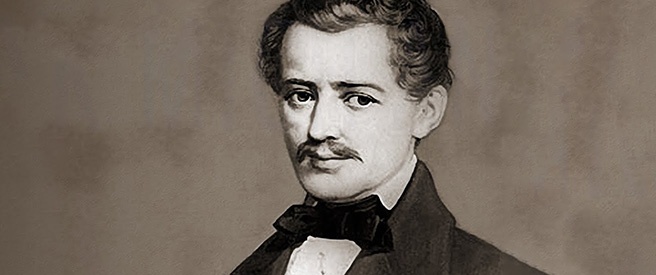
The year was 1848. Revolution shook Europe with wave after wave of civil unrest. Territories then occupied by the Austrian Empire (and today a part of Italy) decided to make a push for independence. The Imperial-Royal Army (led by Field Marshal Joseph Radetzky von Radetz) was having none of that guff and was dispatched to quell the uprising.

Gathering near Verona on the 24th of July, Field Marshal Radetzky’s troops defeated the army of the Kingdom of Sardinia in the Battle of Custoza. The Italians, fearing more bloodshed, had no choice but to agree to a truce with the Austrian Empire. It is against this imperialistic backdrop that Johann Strauss Sr. drummed up his Opus 228: a march commissioned to honor the 81-year-old Radetzky and the Imperial-Royal Army while benefiting wounded war veterans at their victory celebration in Vienna.

The city hosted this bombastic gathering on the 31st of August, 1848, and Field Marhsal Radetsky arrived in full military dress to greet the throngs of people who had come to celebrate his decisive victory. His personal courage on the field of battle, especially at such an advanced age, had cemented his reputation among the men he commanded. When someone in their 80’s risks being stuck on the end of a bayonet after refusing to succumb to Mediterranean heatstroke, you throw them a party just because.

Johann Strauss Sr

A massive success, the gathering was highlighted by the premier and command repeat performance of Strauss’ Radetzky March. The soldiers present loved Strauss’ composition so much that they began wildly clapping during its first performance to show their approval.

This is a tradition that has been passed down to every audience since then, particularly when the piece is played at the Neujahrskonzert held in Vienna every New Years Day. During performances of the Radetzky March, it is traditional for the audience to clap along with the beat of the second (louder) repetitions of the chorus.

The popularity of the March’s musical structure is owed to two important decisions made by its composer. First, Strauss recycled the theme of his Jubel-Quadrille (Op. 130) for the March. It was a risky move, but ultimately one that paid off. The rousing theme simply functions better in the context of a march, in addition to the fact that most people nowadays forget what a “Jubel-Quadrille” is (or how to spell it).

The second decision Strauss made to guarantee the widespread appeal of his Radetzky March was to copy aspects of the music of Franz Joseph Haydn. The rhythmic upbeat of the Radetzky March is eerily similar to the second theme from the “Allegro” in Haydn’s Symphony No. 100, a piece of music composed nearly 100 years earlier. It goes without saying that if you can copy Haydn and get away with it, you are probably doing something right as a composer (they don’t call him “Papa” Haydn for nothing!).

A memorable passage of Strauss’Radetzky March is its Trio, the inspiration for which the composer derived from an old folk melody with two known titles: “Alter Tanz aus Wien” (Old Dance of Vienna) and “Tinerl-Lied” (Tinerl-Song). In the time of Richard Strauss Sr., a “tinerl” was the name given to any contemporary Viennese song originally composed in 3/4 time. It is said that the soldiers of Field Marshal Radetzky were singing this popular tune as they marched back to Vienna after winning the battle of Custoza, making its partial recapitulation during their victory celebration even more personalized.

How the elder Strauss was able to observe them singing this melody while miles away in Vienna is unknown, but he somehow cottoned on to its importance to the soldiers in Radetzky’s regiment and converted their song into 2/4 time for inclusion in his March. The piece is still lauded today as being one of the finest pieces of music ever penned by Strauss Sr., and it continues to get the hands clapping and the feet stomping to this very day. After all, who doesn’t like to feel like they’re part of a winning team?

You can hear the Radetzky March as part of our Night at Oktoberfest!

Watch Party Ideas for Oktoberfest!

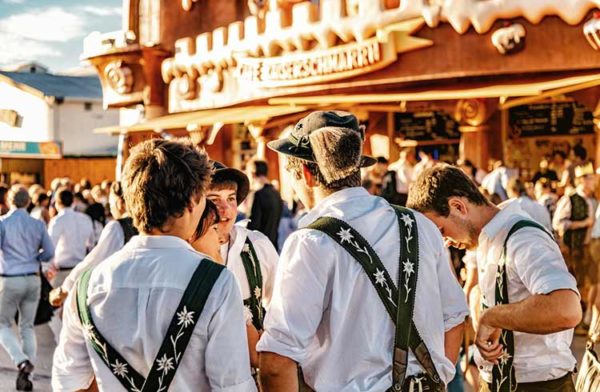
It’s one of the biggest parties in the world…and its a whole lot of fun!  Oktoberfest is a celebration that happens every fall in Munich.

Oktoberfest is the world’s largest Volksfest (beer festival and travelling funfair). Held annually in Munich, Bavaria, Germany, it is a 16- to 18-day folk festival with more than six million people from around the world attending the event every year. Locally, it is called d’Wiesn, after the colloquial name for the fairgrounds, Theresienwiese. The Oktoberfest is an important part of Bavarian culture, having been held since the year 1810. Other cities across the world also hold Oktoberfest celebrations that are modeled after the original Munich event.

With our musical adventure programming this year, we’re encouraging everyone who’s watching from home to make a night of it – with each concert featuring a different travel destination, each watch party is a completely new experience to make your night with the SSO something really special.

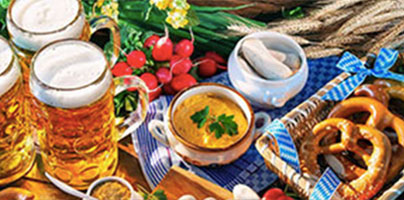
For Oktoberfest…well its all about beer!

Find out more about our Oktoberfest concert

Drinks

So the real Oktoberfest, the beer has to be from one of Munich 6 breweries – Paulaner, Spaten, Hacker-Pschorr, Augustiner, Hofbräu, and Löwenbräu. Each serving tent has beer from the main brewery that sponsors that tent. Your ordering options are limited mainly to:

  • Helles (Light Beer)
  • Dunkel (Dark Beer)
  • Radler (Shandy) (which is 50% Helles mixed with 50% Lemon Soda (Sprite)

A few tents also carry the following beer options:

  • Hefeweizen (Wheat Beer)
  • Russ (just like Radler but with Wheat Beer instead of Light)

For the SSO’s Oktoberfest – we’re asking you to go local with your beer. Saskatoon has an embarrassment of riches when it comes to craft beer. You name it, the Saskatoon breweries have it for you. Why not plan ahead and get some beer from a number of local brewers – then as you enjoy the concert you can “move on to the next tent” in your very own home!

Thankfully Tourism Saskatoon has a list of the breweries you’ve got to try!

Oktoberfest also presents a chance to try the wealth of other Bavarian treats, like Schnapps!

A great little sweeter alcohol to sip on, German schnapps is a syrup-like texture and a taste sensation. Common flavors include Kirsch (cherry), Apfel (apple),  and of course Pfefferminz (peppermint). If you’re looking for something non-alcoholic, you can’t go wrong with Apfelschorle – a delicious apple juice, perfect for the season!

Food

So. Much. Food.
If you’ve ever been to Munich for Oktoberfest, you’ll know that its truly a feast. No wonder they dance so much, they have to work off all that food…and beer!

While you can’t have the full Oktoberfest experience, you can eat like you’re there. Here, 11 traditional Oktoberfest foods.

Roast Chicken
During Oktoberfest, chickens are spit-roasted until the skin is golden brown and crispy. Most people don’t have a rotisserie set up at home, so instead make this classic lemon-thyme roast chicken in the oven. Rubbing a lemon-and-thyme butter over the chicken before roasting ensures superbly crispy skin.

Schweinebraten (roast pork)
A classic Bavarian dish, schweinebraten can be made with a variety of pork cuts, like shoulder or even loin. It’s traditionally roasted with dark beer and onions. For a quick and easy take on the dish, try this pounded pork tenderloin smothered in onion and mustard.

Schweinshaxe (roasted ham hock)
A beloved beer hall classic, roasted ham hock or shank (pig knuckles) are crispy on the outside with tender meat. They’re surprisingly easy to make at home. Try it with Andrew Zimmern’s delicious recipe.

Steckerlfisch (grilled fish on a stick)
Simple and fairly self-explanatory, steckerlfisch is marinated, skewered and grilled fish typically made with local Bavarian fish, like bream, though it can also be made with trout or mackerel. At home, try quick-grilling sardines.

Würstl (sausages)
Würstl refers to a variety of classic Bavarian sausages. Try them at home sautéed in a skillet with bacon and apple sauerkraut. Serve with plenty of mustard.

Brezen (pretzels)
You can’t have Oktoberfest without pretzels. Large and soft, they’re the perfect accompaniment to beer. Try making your own with this über-authentic recipe for German-style pretzels.

Knödel (potato or flour dumplings)
These are large, dense, ultra-comforting dumplings, common in Central Europe. While these potato dumplings are technically Hungarian, the idea is the same. They are like rustic gnocchi.

Käsespätzle (cheese noodles)
This is a savory, cheesy version of spätzle, a traditional egg noodle. This recipe, made with small-curd cottage cheese, is topped with tangy quark, for a doubly cheesy dish.

Reiberdatschi (potato pancakes)
These potato pancakes are served both savory with a salad or sweet with apple sauce. Reiberdatschi are a lot like latkes, so follow Andrew Zimmern’s killer latke recipe for hot and crisp results.

Sauerkraut
If you’re attending Oktoberfest, you’re eating this pickled cabbage with almost anything. This homemade version mixes cabbage with sweet apples and aromatic caraway.

Obatzda (spiced cheese-butter spread)
This might be your new favorite spread. It’s aged soft cheese, like Camembert, mixed with butter, a small amount of beer, and spices including paprika, salt, pepper and garlic. Try this upscale version, made with crème fraîche and Dijon mustard along with farmer’s cheese and, of course, butter.

If you’re looking to order in for your watch party at home, the Granary has you covered. They have a phenomenal Oktoberfest menu for this whole month – give them a call at 306-373-6655

Find out more about our Oktoberfest concert

Roll out the Barrell – the Beer Barrel Polka

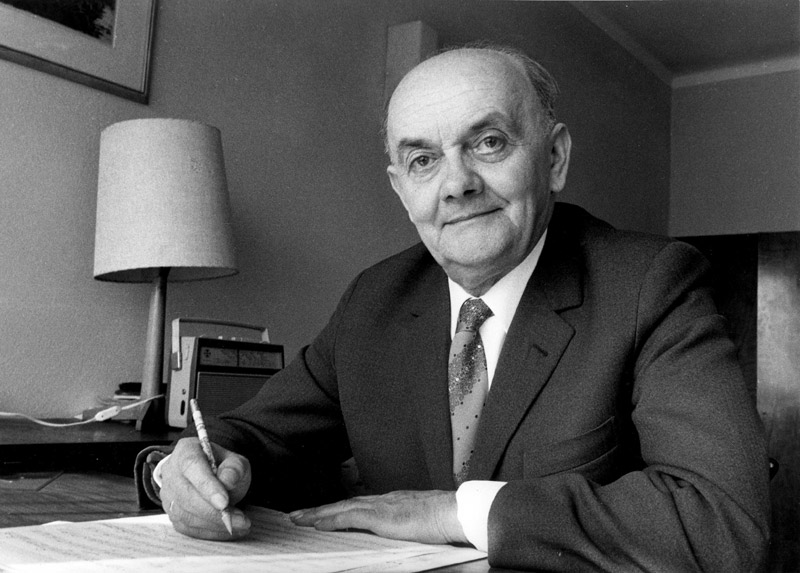
Of the sixty compositions the Czech composer Jaromir Vejvoda left us, none have garnered a more enduring international popularity than his “Beer Barrel Polka”. Known the world over as one of the most popular drinking songs of all time, the “Modřanská Polka” (written in 1927 and titled after the Prague suburb of Modřany where it was debuted) began its life without lyrics. Vejvoda composed the piece after seven years bartending in a pub owned by his uncle, and its immediate success allowed the composer to focus on his music-making full-time. Its first arranger was Eduard Ingriš, whose assistance to Vejvoda was instrumental in refining the polka’s melody.

Jaromir Vejvoda

The Modřanská Polka was an unstoppable hit, with bandleaders across Czechoslovakia enthusiastically encouraging Vejvoda to publish it. After years of playing the song with his own band, Vejvoda published his Modřanská Polka in 1934 under a different title. The polka had been set to lyrics that same year by Polish lyricist Václav Zeman, and a title change was needed to reflect the new version’s pervading theme of unrequited affections: “Škoda lásky”, or “Wasted Love”. When the rights to Vejvoida’s composition were acquired by publishing house Shapiro Bernstein a few years before the Second World War broke out, it was listed under this title.

During the early days of World War II, the melody of Škoda lásky was favored by soldiers on both fronts, regardless of their respective allegiances. In the German language, the polka was retitled yet again (this time as “Rosamunde”) and was recorded by accordionist Will Glahé to great acclaim. It was this version, also distributed by Shapiro Bernstein, which reached the ears of American lyricists Lew Brown and Wladimir Timm. The two were inspired to appropriate Rosamunde into an English drinking song for rousing the Allied troops, even though no incarnation of Vejvoda’s polka makes any reference to drinking beer. While the polka’s opening had originally pined “Škoda lásky, kterou jsem tobě dala” (“A waste of love, the love I’ve given you”), the appropriated American version now trumpeted the now-infamous lyric “Roll out the barrel…”. Why focus on unrequited love when there is beer to drink? It is with this revelation in mind that Brown and Timm set to shaping the version of Vejvoda’s classic that is most widely recognized in pubs and bars today: “The Beer Barrel Polka”.

This version was recorded by some of the biggest names in American music at the time: The Andrews Sisters, the Glenn Miller Orchestra, Benny Goodman, Bobby Vinton, Billie Holiday, and Joe Patek. As the war raged on, Allied Troops would take the opportunity between combat to listen to these versions over the Armed Forces Radio broadcasts. The English-speaking soldiers rejoiced at finally having a “complete” version of the polka that they could sing and drink to. Even the stoic General Dwight D. Eisenhower could not help confessing his love for the polka’s newest form. So iconic was this piece of music that each country in which it became a hit argued that one of their citizens had composed it. Only after the war did Vejvoda receive international recognition for his musical work, one that had brought cheer (and beer) to young men fighting on both sides of a global conflict.

The majority of Vejvoda’s compositions are still regularly celebrated and performed in Czechoslovakia, but he never wrote another piece of music that captured the world’s heart quite like the Beer Barrel Polka. A true phenomenon, the song became an anthem of celebration the world over. From a decadent version by caped entertainer Liberace, to the entrance music of pro wrestler Crusher Lisowski, the Beer Barrel Polka has received treatments in twenty languages and is the unofficial theme song for Germany’s annual Oktoberfest celebration. Not unlike that infamous barrel of beer that keeps getting rolled out, Jaromir Vejvoda’s beloved polka rolled away only to roll back again…aged to perfection. 

We play the Beer Barrel Polka as part of our Night at Oktoberfest concert.

The Clarinet Polka has a wild history!

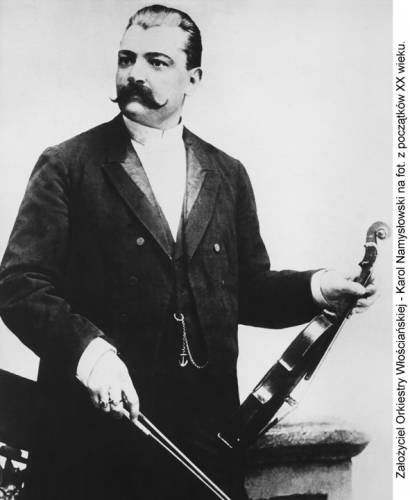
Some fans of folk music may tell you that the Beer Barrel polka is the most famous polka in the world. To that, we say…there is another! The Clarinet Polka (often catalogued as “Klarinett-Polka” or “Klarinettpolka”) is known the world over for possessing one of the most infectious folk melodies ever created. Its upbeat, twirling nature is synonymous with the polka genre, and its simple brilliance has inspired numerous modern renditions. Every clarinetist worth their chops has been inspired to play this at some point in their career. It is odd, then, that (after more than 100 years in existence) the compositional authorship of this beloved tune should still be so hotly contested. The Clarinet Polka is believed to have been written by Polish composer Karol Namysłowski, originally titled “Dziadunio Polka” (after the Polish word for “grandfather”). However, many folk music historians (along with hosts of the popular Polish radio show “Lato z Radiem”, who use the song as an intro to their broadcasts) claim the song was not penned by Namysłowski at all! They insist that the polka in question was composed years earlier in Austria (not Poland) by a composer named A. Humpfat.

Karol Namysłowski

Similar accounts trace this version of the Clarinet Polka (titled “A Hupfata”) to the late 1890s. A vinyl recording of “A Hupfata” was released in 1907 that featured the musical stylings of the Band of the 14th Bavarian Infantry Regiment. This recording preceded Namysłowski’s 1913 copyright of “Dziadunio Polka” (as well as its subsequent 1915 recording in Chicago) by several years. Surely the existence of these records was proof positive that Karol was a folk music thief who somehow pulled off the greatest polka heist of all time…or was he? It turns out that neither the pro-Namysłowski nor the pro-Humpfat camps are exactly spot on in their respective beliefs surrounding the Clarinet Polka’s “true composer”. There was indeed a piece of folk music that resembles the Clarinet Polka as we know and love it today, and its origins can be traced to the end of the 19th century. Composed in today’s Austria (then Bavaria), it was originally titled “Klarinetten Muckl” and appeared printed for the first time in 1906 (in a collection of “Known Songs and Dances” arranged for accordion by Otto Thirsfeld and published by J. Weinberger). A copy of this collection’s first edition can still be viewed at the Austrian National Library in Vienna.

Otto Thirsfeld listed the composer of “Klarinetten Muckl” as “Anonymous”, suggesting that the tune had never belonged to anyone, per se. The missing link to this whole musical mystery can be seen clear as day when translating “Klarinetten Muckl” from standard German into the traditional Bavarian dialect: The song’s title becomes “Ein Gehüpfter” or “Jumping”. Through a linguistic game of Telephone, “Ein Gehüpfter” was morphed into “A Hupfata” by the many labels who recorded the song in its original printed form. Without a definite composer to credit this outrageously popular tune to, certain labels resorted to warping the polka’s altered title even further to make up a name! And so, “A. Humpfat” was born, never having quite existed in the first place. Since no one came forward to copyright what could only be referred to as a “traditional melody” by today’s standards, Namysłowski decided to re-orchestrate the anonymous Bavarian hit for Polish traditional instruments and copyright that piece of music. He had every legal right to do this and drew on his own brilliance as a composer of folk music to introduce the definitive version of the Clarinet Polka to its most enduring fanbase: his native Poland.

The timing and cultural significance of Namysłowski’s rise to fame as a composer cannot be overstated enough. Having attended grade school in Lublin while Poland was still partitioned and under Russian control, he was forbidden to speak his own language or engage in any display of cultural pride. In retaliation for this suppression, and after years of sneaking out of his parents’ home to listen to folk bands at local inns and taverns, Karol graduated from the Warsaw Institute of Music to form the Namysłowski Peasant Orchestra. Based in Zamość, Poland, the band was composed of talented farmers who had learned to play their respective instruments from Karol. Everyone in the group wore traditional Polish cultural dress, as did Karol who served as the group’s bandleader. Karol’s decision to totally embody Polish pride within his group was praised by polka historian Joe Oberaitis, who fondly remarked that “he wrote polkas as nobody else could do it… even supplying [bandmates] with instruments at his own expense! [Karol Namysłowski] literally wore his Polishness – much to the dismay of the authorities – and the countryside

Namysłowski Peasant Orchestra

was filled with the beautiful strains of mazurs, krakowiaks, obereks and of course, a wealth of rousing polka compositions.” After lighting a flame of national pride for the people of Poland, Namysłowski traveled to the United States to establish himself as a composer of international renown. Copyrighting his re-orchestrated “polka chart topper” in 1913, Namysłowski used the Clarinet Polka and its first recording in 1915 to singlehandedly secure the reputation of his band throughout the continental United States.

So it was that, nearly ten years later, the players of the Namysłowski Peasant Orchestra traveled to the United States for one of the biggest international tours in Polish folk music history: 3 months, 80 concerts, spread out over 14 states. Holding their first concert of the tour at the Metropolitan Opera House in New York City, they were invited to perform at the White House for President Calvin Coolidge. Victor Records jumped at the opportunity to sign the group to its label, and at the conclusion of their tour invited Karol and the musicians of the NPO to make 10 back-to-back records in Camden, New Jersey. Namysłowski didn’t just find a diamond in the rough with the Clarinet Polka. He saw in its simple and repetitive refrain an endless array of opportunities for musical expression, especially for his homeland’s improvisatory folk music traditions. The Namysłowski Peasant Orchestra is still in existence today as the Polish Symphony Orchestra, and although their founder penned hundreds of folk compositions during his long and successful career, none is remembered with more pride by the people of Poland than the (literal) grandfather of all polkas: the Clarinet Polka.

You can hear this played by the SSO on our Night at Oktoberfest concert.