Tchaikovsky’s Rococo Variations

Tchaikovsky’s Rococo Variations

Infinitely charming and seemingly unable to age, Tchaikovsky’s Variations on a Rococo Theme is the closest he ever came to writing a full solo work (concerto) for cello and orchestra. Inspired by the elegance and grace of Mozart, the Variations show how brilliant Tchaikovsky could be when he turned his pen to the classical style…but rococo? Not so much!

Jonathan Craig Penner

Rococo was a period of art between the Baroque era and the Classical era. Rococo style is elegant and refreshing – Tchaikovsky wrote his own theme, it wasn’t Rococo after all!

The piece is made up of a brand new theme and eight variations. Tchaikovsky wrote an original theme in a style that meant Rococo to him; the orchestra creates the mood, the horn hands it off to the cello, and they all share the elegant theme repeated four times, allowing the cello to lead us into the variations…

The variations each show us something unique:

Var 1 – Tempo della Theme (same speed as the theme) is full of triplets, lively and graceful!

Var 2 – Tempo della Theme is a dialogue between orchestra and soloist and the statement of the theme has had its rhythms manipulated to make it feel much more lively and brazen, refusing to resolve.

Var 3 – Andante (at a walking speed) is sad. It’s melancholy restatement of the theme is the only time the composer gives us the the music in a minor key.

Var 4 – Allegro vivo (fast, full of life!) warms us up taking us from the previous D minor to sunny sensuous return A major. This is one of the most difficult passages in the piece for the soloist as its filled with constant fast note runs. It’s blazingly fast and ends with a graceful use of a rocket theme (the music literally goes up like a rocket!)

Var 5 – Andante grazioso (walking gracefully) is where Tchaikovsky moves the beat around on us. He’s mixing up where we feel the downbeat and gives us a stunning trill from the cello!

Var 6 – Andante takes that cello trill and hands the main theme off to the flute. When the soloist finally “falls” from the trill to a low E, the orchestra takes over with the joyous theme again. The soloist is given a cadenza (solo virtuosic phrase) that leads us into C major, something that feels so distant and foreign but comfortable all at once.

Var 7 – Andante sostenuto feel contemplative in the warmth of C major as it slowly winds its way toward E major – its Tchaikovsky giving us a hint that we’re heading home before long! There’s a meditative hopefulness here that seems to ask and answer a question, and E major gives us a perfect way to prepare for the return of the home key in…

Var 8 – e Coda: Allegro moderato con anima (Moderately fast with movement) has the cello gracefully bringing us home to A Major. It’s one big crescendo that leaps from fortissimo to piano only to be joined by the orchestra again. Joyful, full of light, buoyant, full of running scales to get us into the Coda that finally gives us the full drama that Tchaikovsky is so known for. This elegant journey comes to a glorious end…one that Mozart would have been proud of!

The SSO is thrilled to have Regina-born cellist Jonathan Craig Penner making his SSO debut with the Variations on a Rococo Theme as part of our Swan Lake concert February 26th.


Tchaikovksy’s Swan Lake

Some works of art become bigger than life. Swan Lake started its life as Tchaikovsky’s first attempt at a ballet…and initially it was a flop.

Premiering in March 1877, Swan Lake came at a pivotal moment in Pyotr Illych Tchaikovsky’ career.  The composer had two symphonies under him, and was writing his landmark piano concerto at the same time, but still hadn’t gained considerable fame. It was a stressful time in his life, entering into a loveless marriage and waiting for his music to take off. Fashioning a love story for the ages out of folk tales from Russian and German lore to tell the story of princess Odette who winds up turned into a swan by an evil sorcerer’s curse. Receiving its premiere at the Bolshoi Theatre in Moscow with one of the day’s leading choreographers there was much hope for this new work…but the ballet wasn’t a hit. At least, not yet.

Tchaikovsky lived in the Russia of the “Mighty Five” – a group of composers’ whose works were simultaneously creating the Russian national voice of music – but for his ballet he looked to inspiration from composers he admired for their stage dance works. He’d found genius and muse in the works of French compoers Adolphe Adam (Giselle) and Leo Delibes (Sylvia) and found there to be an elegance, charm, and and “wealth of melody, rhythm, and harmony”.

Commissioned to compose Swan Lake, Tchaikovsky drew on previous compositions for his new ballet; some of his cousins even noted he’d previously penned a short ballet called “The Lake of the Swans”. He used the technique of leitmotif for the Swan Theme – the music would allow the audience to associate certain themes, characters, or moods, with a melodic idea. In total the ballet took only a year to write from beginning to end and while many see this as his excitement for the music itself, some historians note that he was anxious to finish Swan Lake so that he could get going on composing Eugene Onegin.

At the premiere, audiences and critics felt the score was noise and “too Wagnerian, too symphonic”. To be sure, it was the most symphonic ballet written to date, elevating the orchestral music from the pit to being music worthy of sitting centre stage. But there was a curiousity around the characters of Odette and Odile that started to draw attention from dancers and patrons alike. The ballet continued to be performed and, in the years that followed the composers’ 1893 death, Swan Lake staked its claim as one of the monumental works of romantic ballet and indeed romantic music!

Swan Lake is now one of the most frequently performed ballets, and has earned the honour of being refered to as a “beloved classic”.

You can see the SSO perform the music of Swan Lake February 26th – live at TCU Place or live online at ConcertStream.tv


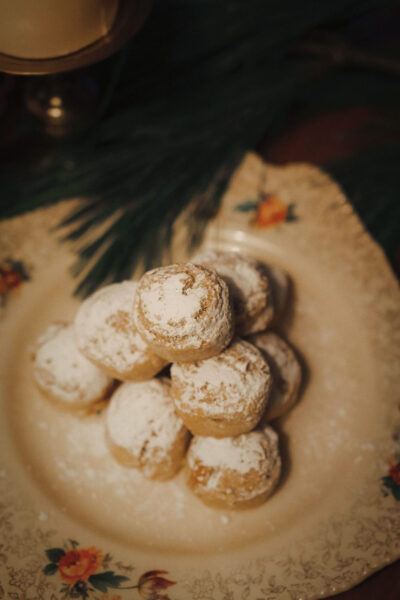
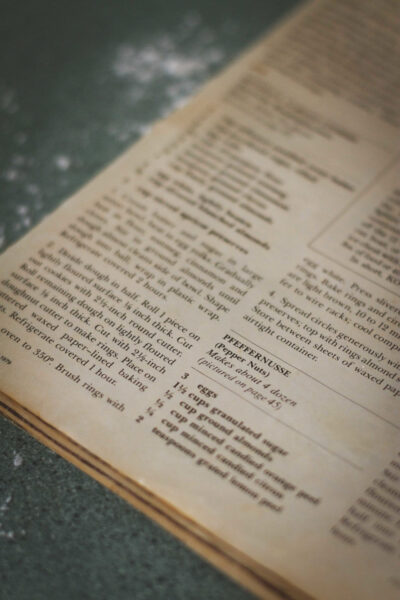
Pfeffernusse with Margaret!

This post was created for our 2021 Holiday Pops. The recipe is so good, we couldn’t help but share it again!

Christmas is all about the music…but its really all about the baking!

Our Holiday Pops concert this year is special – its the first time we’ll have the full orchestra for our annual festive show in two years…so it feels like we’ve got everyone home for the holidays. It’s going to be a night filled with festive joy.

Last year we decided we would invite ourselves into the kitchen’s of our Principal Bassoonist and Director of Administration for some cookies and toffee, and this year we wanted to try something traditional. Margaret Wilson, the SSO’s Principal Clarinetist, had a family tradition of making pfeffernusse for Christmas and it seemed perfectly fitting for a Holiday Pops that feels like a family homecoming.

Margaret is no stranger to our annual Holiday Pops as she’s been our Principal Clarinetist for 45 seasons! To hear how excited she is for these new arrangements by Maria Fuller means that the concert is a festive treat.

Pfeffernusse is a traditional German cookie that is just the right blend of savory and a touch of sweet. They date all the way back to 1753 and have been part of Yuletide celebrations in Germany since 1850!

There’s even wonderful stories about the composer Felix Mendelssohn traveling a good distance just to get Pfeffernusse, writing: “I can’t conduct the Düsseldorf Music Festival because I have to rest and move to Soden, I’m going to Offenbach with Ms. Bernus to buy Pfeffernüsse.”

Let’s get started!

  • 3 eggs
  • 1 1/2 cups sugar
  • 1/2 cup ground almonds
  • 3/4 cup minced candied peel
  • 2 tsp. grated lemon peel
  • 3 cups (approximately – probably less) all-purpose flour
  • 1 tsp. cinnamon
  • 1/4 tsp. ginger
  • 1/2 tsp. ground pepper
  • 1/8 tsp. ground cloves
  • 1/4 cup rum or brandy
  • powdered sugar

l. Beat eggs and sugar with electric mixer in large bowl until thick and lemon coloured. Stir in almonds, candied peel and grated lemon peel

2. Sift together approximately ll112 cups cups of flour with the cinnamon, ginger, pepper and cloves. Stir into egg mixture and keep adding more flour until dough almost cleans side of bowl.

3. Knead on lightly floured surface, adding as much flour as needed until smooth – about 1 minute.

4. Divide dough in half: shape each half into log 1 1/2 inches in diameter. Refrigerate wrapped in plastic wrap at least one hour.

5. Cut logs into 3/4 inch thick slices: round edges slightly. Place slices on greased or parchment lined baking sheets. Let stand at room temperature overnight.

6. Heat oven to 325 degrees. Turn cookies over. Bake until centres are firm to the touch and tops are golden – approximately 20 minutes.

7. Transfer to wire racks. Brush cookies generously with rum or brandy; sprinkle generously with powdered sugar. Cool completely. Texture and flavour improve if allowed to age in airtight container 1 to 2 weeks.

Margaret’s secret tip: Although the original recipe calls for the spices to be sifted into the 3 cups of flour, I have never been able to work in that much flour. That is why I put the spices into less flour to start and then work in as much flour as need – usually about 2 1/4 – 2 l/2 cups.

Time to get your baking hat on!

[youtube https://www.youtube.com/watch?v=fJrc2Yesn08]

Toffee for Christmas – Watch Party Idea

This post was part of our holiday celebrations in 2020, but we wanted to bring this wonderful recipe back for you!

At the SSO offices, December means one thing…our Director of Administration is bringing Toffee to work.

Natal Laycock’s role at the SSO is an important one (not just because of the toffee!), and we all think she’s part super-human as she handles work, home, kids, even piano lessons! In her 6 years at the SSO, her toffee has become the stuff of legends – its not every day that someone has made toffee for you, so when it happens its a memorable moment.

We invaded Natal’s toffee making this year to steal her recipe for you to give a try as a pairing with our Candlelight Christmas concert!

Delicious – let’s get started!

Here’s what you need – Ingredients:
1 can condensed milk (Orignal, not low fat)
1 cup cane syrup (ie Roger’s Brand)
1/2 cup butter (scant)
2 cups golden or brown sugar

But you’ll also need…
Heavy bottom sauce pan (2.5L or larger)
Long handled wooden spoon
Candy thermometer (optional, but recommended)
cookie sheet
parchment paper (or extra butter)

Optional – up to you, but not in ours:
chopped nuts

Now let’s get to it!

Step 1: Line the cookie sheet with parchment, or grease with butter and set aside. If using nuts, sprinkle on the sheet now.

Step 2: Combine all ingredients into sauce pan, and set the burner to at least med-high.

Step 3: Stir continuously, scraping the bottom, so the sugar does not burn to the bottom of the pan. The mixture will begin to change color, and fleck with darker pieces.

Warning: boiling candy splatters, and it burns!

The mixture will need to boil until it reaches over 300*F (hard crack). This will take roughly 20 minutes, depending on your burners. Keep stirring and scraping! Stick the candy thermometer in after about 10 minutes, ensuring it stays below the surface, and off the bottom of the pan to get an accurate read.

Step 4: Once the mixture has reached hard crack, remove from heat and pour over prepared cookie sheet.

Optional step: ‘score’ the toffee when it is partially set. Leave the toffee out at room temperature. Drag a butter knife across the surface to create break or ‘score’ lines in roughly the size of the pieces you want to make. If the toffee sticks to the knife, or the lines fill back in, it’s still too hot.

Step 5: Set tray in fridge/freezer/snow bank until set and then break apart. If you’ve scored it, turn the toffee upside down so the score lines are facing down.

Step 6: Break it up! As you can see from the video, even a screwdriver works…

Important: Store in a ziploc bag, or sealed container, and keep refrigerated.

It’s an incredibly tasty treat that is worth all that time standing over the heat! And once you’re done, it can be enjoyed with a number of classic holiday drinks…hot cocoa, milk, tea, coffee (Baileys optional!), and peppermint schnapps.

If you’ve never tried to make homemade toffee, this is your year. Let us know how it turned out!

Leroy Anderson’s Music is Christmas

Not many people do their best thinking during a heat wave. Then again, most people are not Leroy Anderson. The original idea for the light-hearted orchestral romp known as “Sleigh Ride” was born in the mind of the American composer during a heat wave in July of 1946.

Finished in February 1948, the instrumental piece would not receive its classic lyrics until 1950 (when lyricist Mitchell Parish added in the bits about riding in a sleigh and other fun wintertime activities). The orchestral version was first recorded in 1949 by Arthur Fiedler and the Boston Pops Orchestra. It quickly became one of the orchestra’s signature songs, and the 45 rpm version was originally issued on red vinyl in celebration of the Christmas season. So catchy was the main melody that other composers of the era tried to pass it off as their own. The main melody of “Sleigh Ride” was used without credit to Anderson in the 1949 western “Streets of Laredo”, scored by Victor Young. Sleigh Ride lyricist Mitchell Parish worked with Young around this time, which might explain how the latter got his not-so-bright idea to “sample” Anderson’s work. That very same year, The Andrews Sisters created the first ever recording of Parish’s vocal version, and the popularity of Sleigh Ride sped off like… well, like a Sleigh Ride!

Although the piece is often associated with Christmas, appearing on more Christmas compilation albums than one can even count, its lyrics leave out any mention of a holiday. Perhaps this is what lends a universal appeal to Sleigh Ride. The song is noted for the characteristic sounds of a horse clip-clopping its way down a country road, and the sound of a whip is featured in most versions to give the illusion of the horse being spurred into motion. The percussionist shines in this piece, for it is they who oversee the creation of these sounds on temple blocks and a slapstick, respectively. Toward the end of the piece, a trumpet imitates the sound of a horse whinnying. 

Sleigh Ride was written in seven-part rondo form, with the first rondo episode utilizing an unusual modulation to the third (and then the second) note of the scale. This is not easy to sing, and therefore many recorded versions of Sleigh Ride err on the side of caution by changing the harmonies or omitting this first rondo altogether. This decision was made for the 1963 cover made by the American girl group the Ronettes. This Phil Spector-produced recording is easily the most popular version outside the traditional pop standard genre, charting yearly until it became the group’s second-highest chart hit in the US (after “Be My Baby”). This version of Sleigh Ride features the beloved “Ring-a-ling-a-ling, ding-dong-ding” background vocals, and makes use of the clip-clop and whinny of a horse at both its beginning and end. That’s two adorable/scary horse sounds for the price of one Sleigh Ride.

But Leroy Anderson was no one-hit holiday wonder. Composing “A Christmas Festival” in 1950 during his time as an arranger with the Boston Pops Orchestra, Anderson originally conceived of the wintertime smash-hit when Arthur Fiedler (the conductor-in-chief of the BPO) requested a favor of him. Fiedler needed a piece of music that would cover two sides of a 45 or 78rpm ‘single’ for the holiday season. Anderson did not disappoint. He created an orchestral medley of well-loved Christmas songs and carols into a compelling concert overture. The main theme of Christmas Festival relies on the tunes of ‘Joy to the World’, ‘O, Come all ye faithful’ and ‘Jingle Bells’, but other favorites (such as ‘Deck the Halls’, ‘Good King Wenceslas’, ‘God Rest you Merry Gentlemen’, ‘Hark the Herald Angels Sing’, ‘The First Noel’ and ‘Silent Night’) are also utilized to great effect. Relying on subtlety to pull off such an ambitious combination of Christmas music, the arrangement of Christmas Festival boasts exceptional  orchestration that provides each instrument with a moment to shine. 

Despite numerous contributions to the American orchestral standard genre, Leroy Anderson will be remembered for his prolific contribution to the musical soundtrack of the holiday season. The American Society of Composers, Authors and Publishers (ASCAP) have repeatedly lauded “Sleigh Ride”, as it consistently ranks as one of the top 10 most-performed songs written by an ASCAP member. ASCAP named “Sleigh Ride” the most popular piece of Christmas music in the U.S. in 2009–2012, based on performance data from over 2,500 radio stations. And, while Johnny Mathis’s has become the most popular vocal version, Leroy Anderson’s recording remains the most popular instrumental version. As Steve Metcalf put it, “‘Sleigh Ride’ … has been performed and recorded by a wider array of musical artists than any other piece in the history of Western music.” For giving us all a song to feel merry and bright about in these dark and chilly days, we salute you Leroy… and that strange trumpet-horse you rode in on. 


The Bear Necessities

Franz Joseph Haydn (1745-1809) is remembered today as one of the most prolific composers of the eighteenth century, and possibly of the whole Western music canon. He is commonly referred to as the father of both the symphony and the string quartet! Along with Wolfgang Amadeus Mozart and Ludwig van Beethoven, he completes the trio now known as the first Viennese School, so called for their connections to the city of Vienna, the cultural heart of Europe in the eighteenth century. Owing to both his long lifespan and his enviably stable employment conditions, Haydn’s was able to amass a prodigious compositional catalogue, including 104 symphonies, 50 concertos, 84 string quartets, 24 stage works, and 12 masses. In the 21st century, Haydn may not hold the same household name status and Mozart and Beethoven but his reputation during his own lifetime towered above them both! 

The son of a wheelwright and a castle cook, Haydn’s musical talent was recognized early on, leading to his tenure as a choirboy at St. Stephan’s Cathedral in Vienna. Following his voice break, Haydn turned to composition, eventually landing the position of Kapellmeister (Music Director) at the Esterházy court. The Esterházy family were highly prominent landowners within the Holy Roman Empire, holding properties on either side of what is now the Austro-Hungarian border. Haydn served three successive Esterházy Princes, spending the majority of his tenure going back and forth between their two primary residences, Scholss Esterházy in Eisenstadt (in modern-day Austria) and Esterháza in Fertőd (in modern-day Hungary). Upon the death of Prince Nicolaus (the second of the three Princes), Haydn’s duties were dramatically reduced, opening up the possibility of new opportunities further afield. 

As Haydn’s obligations to the Esterházy family decreased, he started laying the foundations for what would eventually become an extremely lucrative career as a freelance composer. Haydn started selling his music to publishing companies all over Europe, especially in London, Paris, and Vienna. Many of his most famous and beloved works today were composed, not for his Esterházy patrons, but for an international list of publishers and a growing audience of middle-class amateur enthusiasts.

In 1785, Haydn was approached by Joseph Bologne, Chevalier de Saint-Georges with a commission for six symphonies to be performed by Saint-Georges’ orchestra, the Concert de la Loge Olympique. These works would eventually be dubbed the ‘Paris Symphonies’ and were still being performed by Saint-Georges and his orchestra in 1789 when the organization disbanded in the turmoil of the French Revolution. The two most popular of these works were Symphony No. 85, nicknamed La Reine due to the favour it was shown by Marie Antoinette, and Symphony No. 82, nicknamed L’Ours (The Bear).

The Bear Symphony (so called for the final movement’s uncanny but unintentional resemblance to the music used to accompany dancing bears, a popular type of Parisian Street entertainment), is as delightfully sassy as the preceding anecdote. The first movement opens with a bombastic hunting horn theme that is sure excite. As to be expected in a sonata form, this is the first of two main themes, the second theme wonderfully contrasting the first with its beautifully endearing quality. In the central development section, Haydn explores the more sombre expressions of the minor mode, modifying the movement’s themes to fit this change in mood. This finally gives way to a restatement of the first theme, although this time it is not quite so brash.

Movement two takes the form of a theme and variations, the standard structure for a symphonic second movement. However, this movement differs from expectation with Haydn’s use of two complimentary but distinct themes that both get developed throughout the movement. On first listen, the music sounds simple with sometimes only minimal alterations between thematic restatements. However, this is indeed the point as Haydn is subtly setting up the listener’s expectations, only to thwart them a moment later. The effect is like that of a roller-coaster ride, and equally as thrilling. 

The third movement, a minuet and trio, opens with the air of courtly pretension that often accompanies the minuet style. However, this is merely what appears to be the start of a witty commentary from Haydn on the façade of courtly life. The music continuously becomes more unhinged, before returning to the opening theme as if nothing alarming had just happened. The fourth movement, another sonata-allegro form, uses a repeated motif made up of a bass drone interspersed with quick grace notes. It was this motif that had some listeners daydreaming about dancing bears. The music is so exuberantly playful that you will have no alternative but to dance in your seat. To do otherwise would be unBEARable! – Written by Kieran Foss

Music Talk with Adam Johnson

Maestro Adam Johnson was the very first guest on the SSO’s Music Talk from McNally – that was 7 years ago!
We’re thrilled to have him back leading this very important concert featuring the music of Chevalier de Saint-Georges and Haydn.


The French Mozart

Many of the eighteenth-century composers whose names are still familiar today came from Vienna, Europe’s cultural capital at that time. It is therefore ironic the François Devienne (1759-1803), whose last name literally translates as ‘from Vienna’ was in fact a fabulous classical composer from Joinville, France. Devienne is famous, not only as a composer, but also as a virtuoso player on both the flute and the bassoon – naturally, many of his concertos feature these two instruments. His virtuosity in conjunction with his dramatic compositional style has led some contemporary scholars to nickname him “The French Mozart.” 


Little is known for certain about Devienne’s early musical life. There has been some speculation that he studied music with his elder brother in the town of Deux Ponts, but perhaps this theory is a bridge too far! The earliest detail known for certain is that, by 1779, he was playing with the Paris Opéra orchestra as the last chair bassoonist. During this period, he was also studying the flute with the orchestra’s principal flautist, Félix Rault. Devienne remained with the opera for only one year, after which he entered the service of a private patron, Cardinal de Rohan. Following his entry into the freemason fraternity, he became a member of the Concert de la Loge Olympique, a masonic orchestra led by Joseph Bologne, Chevalier de Saint-Georges. 


Many of Devienne’s early compositions received their public debut at the Concert Spirituel, one of the earliest public concert series. In 1782, Devienne appeared there as a soloist, performing a flute concerto that was likely his Flute Concerto No. 1. He went on to perform at the series at least seventeen more times, often playing virtuosic works of his own composition that featured either the flute or the bassoon. 


At age 31, Devienne joined the military band of the Paris National Guard, a decision that would eventually help him transition from a struggling artist to a central figure in Parisian musical circles. In this role, he began teaching at the Free School of Music of the National Guard, an establishment for the musical education of the children of soldiers. This institution would later be renamed the National Institute of Music and eventually go on to become the Paris Conservatoire, one of the most prolific music schools in Western musical history, producing future icons like Nadia Boulanger and Claude Debussy. Devienne was amongst the Conservatoire’s original faculty and was its first Professor of Flute. 


Though Devienne’s music was enthusiastically received in his own time, his status was eventually eclipsed by the Western world’s obsession with the music of Wolfgang Amadeus Mozart and Ludwig van Beethoven. It wasn’t until the 1960s that his music was revived by Jean-Pierre Rampal who succeeded in inspiring later generations of flute players to take up these wonderfully virtuosic works. The SSO is overjoyed to have its very own principal flautist, Allison Miller, rise to the challenge of Devienne’s music with a stunning performance of his most famous piece, his Flute Concerto No. 7.


While the concerto fits the standard model of three movements in a fast, slow, fast configuration, the music itself is anything but standard with its quick mood changes and fabulous demonstrations of the flute’s extensive range of capabilities. The concerto is also one of only three that Devienne wrote in the darker minor mode. The first movement loosely establishes two thematic centres, one melodramatic to the max, the other more lyrical and understated. The incredible balance that Devienne finds between these two themes keeps the listener engaged and on the edge of their seat. Movement two, while being more pastoral in temperament, still manages to have some weight to the music, augmented by Devienne’s imaginative ornamental writing and the not one but two extended cadenza sections for the soloist. The third movement is a rondo form with its repeated theme displaying a mischievous energy, interspersed by a carnival of magnificent musical colours and moods that run the gambit from idyllic to triumphant. If you’re looking for a uniquely exhilarating musical experience, Devienne’s Flute Concerto No. 7 is certain to deliver!


Written by Kieran Foss

A Little Knight Music

Joseph Bologne, Chevalier de Saint-Georges (1745-1799) was one of the most distinguished musicians and composers of late-eighteenth century France. Born in 1745 to a French aristocratic father and his African slave mistress, Nanon, Saint-Georges’ mixed heritage was cause for both intrigue and prejudice among the French elite. One of the more repulsive anecdotes from his life involved his rejection as music director of the Paris Opéra at the behest of its four leading ladies on overtly bigoted grounds. Despite this and similar setbacks, Saint-Georges was able to establish himself at the heart of French musical life, first as a virtuoso violinist, and later as a conductor and composer.


Saint-Georges’ early life was focused not on music, but on the art of fencing. He studied with master or arms Nicolas Texier de La Boëssière until graduating at age 19, whereupon he was named a Gendarme de la Garde du Roi (Man of Arms of the King’s Guard) and earned the moniker ‘Chevalier’ (Knight). Following his 1766 sparring duel with famed Italian fencer, Giuseppe Faldoni, Faldoni named Saint-Georges the finest swordsmen in all Europe. With this in mind, it is amusing to consider the audience’s reaction when, in 1769, this renowned swordsman took to the stage as a violinist with Le Concert des Amateurs. 


Saint-Georges’ musical training is subject to some debate. François-Joseph Gossec and Antonio Lolli both composed pieces dedicated to Saint-Georges, suggesting that they may had been his musical mentors. There is also a claim that Saint-Georges studied with the famed violinist, Jean-Marie Leclair, but this has never been proven. This dearth of information means that Saint-Georges’ 1769 appearance is the first moment of his musical career to which we can point with any clarity. 


Saint-Georges’ early works span the spectrum of fashionable genres in pre-revolutionary France. He wrote numerous instrumental works, including Violin Concerti, Symphonie Concertantes, String Quartets, and Sonatas. However, opera would eventually become his true passion. Following the debut of his first Comédie-Italienne (a genre of French comic opera with Italian influences), entitled Ernestine, he focused almost entirely on stage works, leaving behind his earlier interest in instrumental music genres. 


While Saint-Georges was by no means naïve to the symphony genre (he famously commissioned and conducted Franz Joseph Haydn’s Paris Symphonies), he appears to have mostly avoided symphonic compositions, favouring the more French Symphonie Concertante genre. Symphony No. 2 was published in 1799 (the year of his death) alongside Symphony No. 1. These were the only symphonies he ever wrote, and Symphony No. 2 is actually a repurposing of the overture from his most successful Comédie-Italienne, L’Amant Anonyme.


Symphony No. 2 differs from modern symphony expectations as it contains only three movements in contrast to the now standard four. Nevertheless, the opening movement does start with the expected two themes of a sonata form. The first theme harkens back to the galante style of the early eighteenth-century, favouring a directness and simplicity that welcomes the audience into the piece. This contrasts with the second theme that mimics the empfindsamkeit style, which responded to the galante’s simplicity with a complex sensitivity. While these two themes are intriguing imitations of earlier classical styles, it is in the following development section that Saint-George shows off his artistic prowess. Here, he invokes the Sturm und Drang (Storm and Stress) artistic movement that flourished in the late-eighteenth century, introducing a depth and anxiety that would later spur the music of composers like Ludwig van Beethoven to the heights of compositional stardom. 


The second movement appears to emulate an earlier baroque style, but also connects to the sensitivity of movement one’s second theme. The second movement, unlike the first, maintains the same emotional quality throughout – a standard procedure in baroque music. It’s quiet melancholy finally gives way to the exuberant opening of the third movement, which initially promises a quick and bombastic closing to the symphony. This expectation is dashed by the introduction of a second section, that consisting of two themes that follow an ABA structure. Only with the return of the movement’s opening music can the audience share in the true moment of triumph. Saint-Georges leaves us with an excited sense of homecoming, certain to leave everyone with a sense of utter satisfaction!


Written by Kieran Foss

Joseph Boulonge the Chevalier de Saint-Georges

Audiences today don’t know enough Joseph Bolonge, the Chevalier de Saint-Georges, and we need to change that because he was an important figure in music history who’s music is making a major comeback.

Chevalier de Saint-Georges was a champion fencer, classical composer, virtuoso violinist, and conductor of the leading symphony orchestra in Paris. Born in the French colony of Guadeloupe, he was the son of George Bologne de Saint-Georges, a wealthy married planter, and an enslaved Senegalese African woman named Anne dite Nanon.

His father took him to France when he was young, and he was educated there, also becoming a champion fencer. During the French Revolution, the younger Saint-Georges served as a colonel of the Légion St.-Georges, the first all-black regiment in Europe. He fought on the side of the Republic. Today the Chevalier de Saint-Georges is best remembered as the first known classical composer who was of African ancestry; he composed numerous string quartets and other instrumental music, and opera.

The Chevalier played a key role in the aristocratic life of Paris in late 1700s, with close ties to the Palace of Versailles. The Chevalier often found himself the guest at the private musicales salons of Marie Antoinette at Versailles…with Chevalier playing his violin sonatas, with the Queen accompanying on the forte-piano.

Chevalier de Saint-Georges’ music was the toast of Paris and Versailles. During the 1780s, Saint-Georges’ star continued to get brighter and brighter. His output during this time was swift – operas, concertos, sonatas – but he also shaped the music that Paris was hearing. We have Saint-Georges’ to thank for the commissioning of Haydn’s Paris Symphonies, which the Chevalier conducted upon their premieres.